What is track maintenance and what does it include?
What is track maintenance and what does it include?
Track maintenance is the planned work that keeps the permanent way fit to run on. It includes three things in order: measurement (track geometry recording, internal flaw detection, profile and roughness), rail treatment (grinding, milling, welding and repair) and supporting structure work (ballast, tamping, fastenings, sleepers, turnouts and drainage). It divides into preventive work done on a tonnage-based schedule, and corrective work triggered by a defect that has already formed.
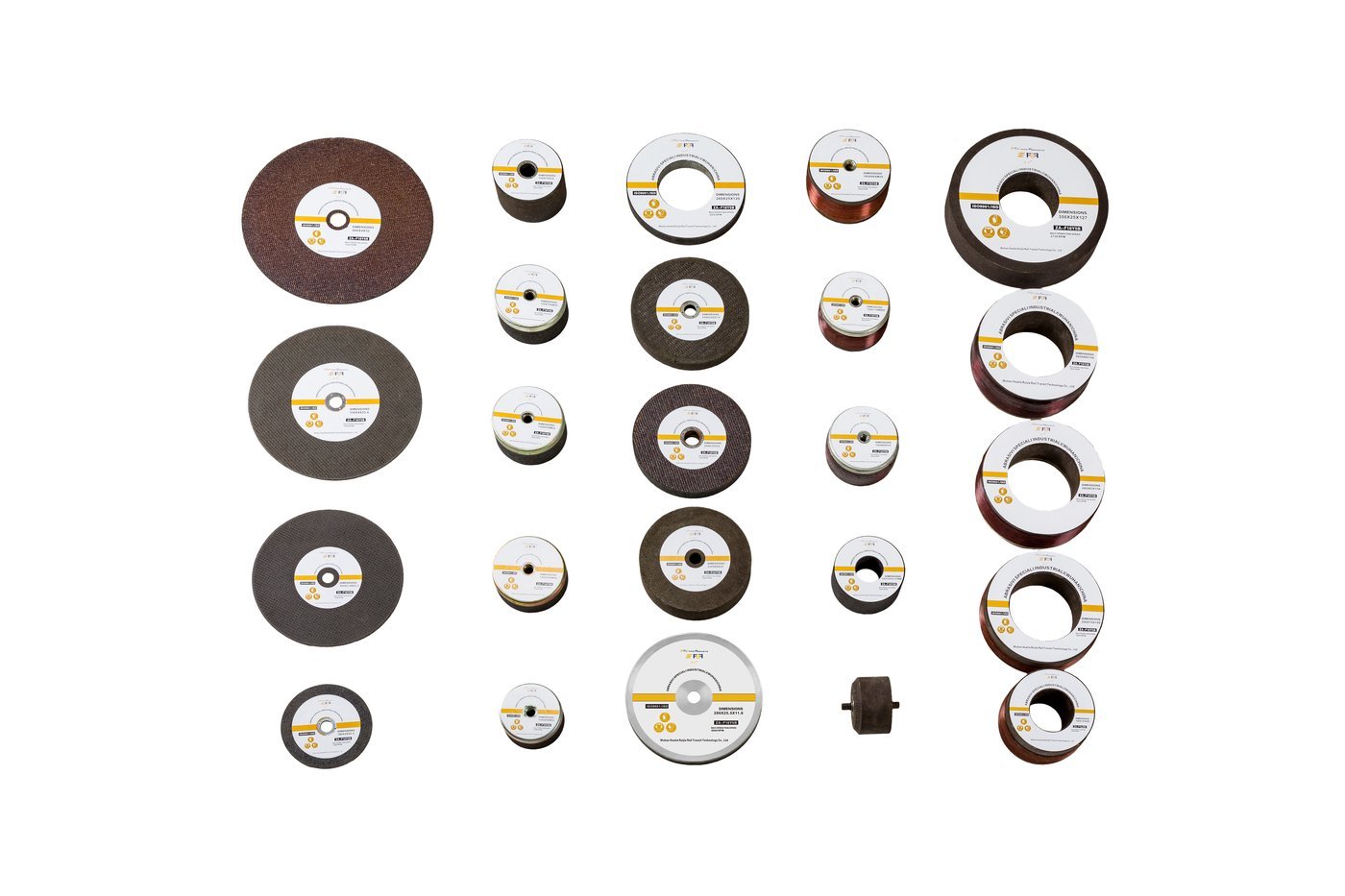
What track maintenance includes
| Work stream | What it covers | What it protects |
|---|---|---|
| Inspection and measurement | Track recording runs, track geometry trolleys, ultrasonic flaw detection, rail profile and roughness measurement | Sets the interval for everything else — nothing is planned without a baseline |
| Rail grinding | Removing the rolling-contact-fatigue layer and restoring the design profile; preventive or corrective | Profile, wheel/rail contact, surface integrity, service life |
| Rail milling | Cutting rather than abrading, for defects deeper than the grinding depth limit allows | Defects grinding cannot reach within the depth cap |
| Welding and local repair | Built-up welds, welded joints, crossings, scuffed and indented areas, then ground back to profile | Local damage that would otherwise spread |
| Ballast and tamping | Lifting, lining and tamping to a delivered plan, followed by re-measurement | Geometry — the rail must sit where the profile was designed to work |
| Fastenings and sleepers | Replacing or retensioning fastenings, dealing with sleeper condition and rail seat abrasion | Gauge and load transfer |
| Turnouts and crossings | Separate plan, separate machines, separate acceptance — gauge, contact band and transition into big-machine ground | The highest-load, most defect-prone part of the network |
| Drainage and structures | Drains, cess, bridges, tunnels and earthworks interfaces | Removes the root cause of many geometry faults |
Preventive versus corrective — and how the schedule is set
Rail treatment has shifted from correcting damage once it is found to preventive grinding: removing the fatigue layer on a schedule, at shallow depth, so the parent metal is never damaged. Prevention costs less over the life of the asset and extends rail service life. On China's networks the trigger is cumulative traffic, not the calendar:
| Line type | Preventive trigger | Interval limit |
|---|---|---|
| High-speed railway | Every 30–50 Mt of total passing tonnage | No more than 2 years |
| Conventional line, straight and curves over 1,200 m radius | One grinding process per 100 Mt | Per the maintenance plan |
| Conventional line, curves under 1,200 m radius | Every 30–50 Mt | Per the maintenance plan |
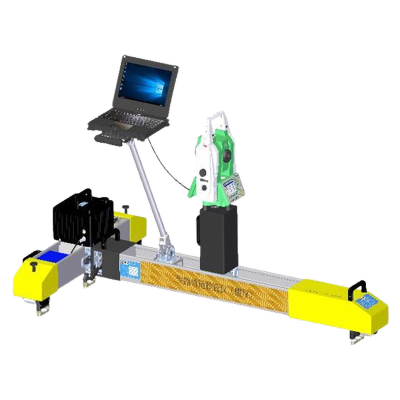
The geometry side works to the same logic. A track geometry measurement system plans tamping from long-wave irregularity, and the work is closed as a loop: pre-measure, generate the lift and lining plan as an ALC, AGC or TGCS file for the tamping machine, tamp, re-measure, then issue the gauge, alignment, level and TQI reports and grade the section. The whole programme, from inspection interval to acceptance, is set out on the rail maintenance solution page.
The numbers the work is judged against
- Surface: flatness within 0.3 mm under a 1 m straightedge and feeler gauge; roughness Ra ≤ 10 μm; no blue burning or oxide layer; ramps better than 1‰; no more than 0.5 mm removed from the parent metal.
- Profile: under a grinding quality index, GQI ≥ 85 is excellent, ≥ 70 is acceptable, with the railhead split into four zones and tolerances held at +0.2/−0.4 mm at the head centre and ±0.2 mm elsewhere.
- Geometry: average TQI before and after the tamping run, which is how a section is graded rather than by appearance.
Case and data — what a managed programme delivers
RailwayCare has supplied the grinding wheels behind these programmes since 2004, and the on-track records show what disciplined track maintenance buys. On the Liuzhou network a Molaton-wheeled GMC-96X unit ground 18.72 pass-kilometres inside a single 2-hour possession, and its CYF wheels consumed 20–30 mm against 43.5–59 mm for the imported wheels they replaced — roughly double the life. On the Yiyang railway a wheel reached 5.7 pass-kilometres per millimetre of consumption and on Shuohuang 4.98. On the Hewu high-speed line the same comparison measured 4.28 versus 3.27 pass-kilometres per millimetre, with the best single wheel running 214.22 pass-kilometres and no continuous blue burning on the inspected surface. At the China Academy of Railway Sciences, wheels measured 1.4–2.6× better wear than the order specification required; a 600-wheel Shenhua batch passed acceptance; and turnout grinding has been measured cutting car-body lateral acceleration from 0.20 m/s² to 0.04–0.08 m/s². Geometry work follows the same pattern — on the Taiyuan network, precision tamping carried out on a measured plan took average static TQI from 7.19 to 4.52 and dynamic TQI from 7.64 to 4.67 across 15.28 km of work.
Today Molaton production runs to 500,000 wheels a year, certified to ISO 9001, ISO 45001 and CRCC, against the standard JB/T 11431 that RailwayCare drafted.
Related questions you may also ask
What is rail maintenance and why does it matter? Rail grinding cost per kilometre: what operators pay What is a rail grinder train and how does it work?Turn your track maintenance plan into wheel specifications
Send us your line type, annual tonnage and the grinding machines you run, and we will map the wheel specification and its expected pass-kilometres to that duty. Or send the part number you use today for a like-for-like Molaton quote.
Get a Wheel Recommendation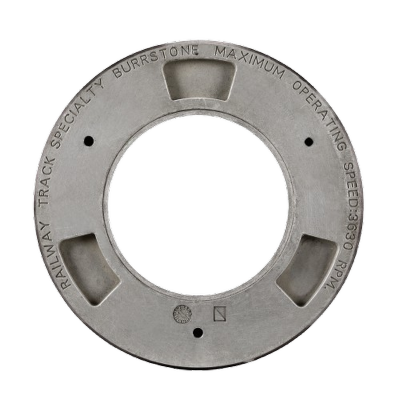
Are you looking for a reliable manufacturer of railway grinding and track maintenance equipment?
We can quickly provide customers with market analysis, technical support and customized services.
Safe Tracks Proven by China
- Name
- Phone
- *Title
- *Content