What is track grinding for rail stabilization?
What is track grinding for rail stabilization?
Track grinding is used for stabilization in the sense of running stability: it restores the rail's design profile so the wheel contacts the rail where it was designed to, which centres the vehicle, lowers the dynamic forces fed back into the track, and reduces the vibration and noise the track and the rolling stock inflict on each other. It is not a substitute for track stabilization in the civil-engineering sense — grinding works on the steel, tamping and stabilizers work on the ballast and the geometry. A stable track needs both.
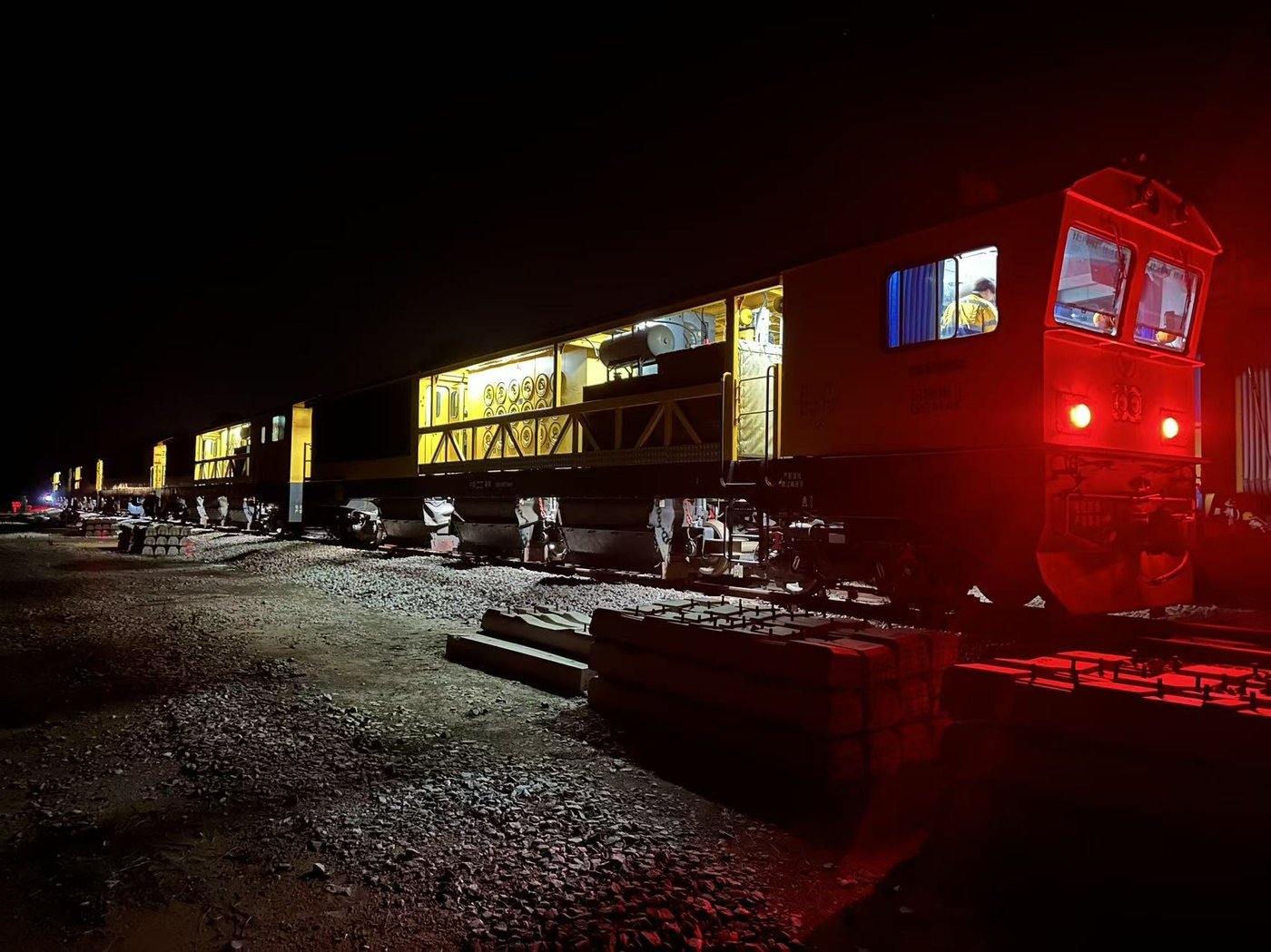
Two different things are called "rail stabilization"
| Meaning | What is being stabilized | What does the work |
|---|---|---|
| Structural / track stabilization | The track structure: level, alignment and the ballast bed that resists the sleepers moving, plus locked rail temperature on continuous welded rail | Measurement and planning systems, tamping machines, lifting and lining machines, and dynamic stabilization |
| Running stability (what track grinding addresses) | The wheel-rail interface: contact position, contact geometry and the dynamic forces generated as the vehicle runs | Profile grinding — grinding trains, profile grinders and turnout grinders |
The distinction matters commercially, because a buyer who grinds perfectly still has an unstable track if the ballast and alignment are not corrected, and a buyer who tamps perfectly still has poor running stability if the profile no longer matches the design. In practice the two are executed in the same possession, on the same measured survey, with the profile handed over against GQI and the geometry against TQI.
How restoring the profile stabilizes the vehicle
The mechanism is direct and it is documented. Rail is the primary load-bearing component of the system — traction and braking depend on adhesion at the wheel-rail contact — so the shape of that contact governs how the vehicle runs. Surface damage and wear destroy the rail's optimum design profile, which degrades the wheel-rail contact condition and increases running noise and vibration, and accelerates the deterioration of both vehicle components and rail. Grinding reverses the first step of that chain: it puts the design profile back.
What comes back with it is a properly placed contact band. Turnout practice gives the target numerically: the main contact band on high-speed turnouts should be about 25–30 mm wide, and 35–40 mm on conventional and heavy-haul turnouts, with the grinding objective being a profile that contacts the nominal rolling-circle region of the wheel tread and avoids contact at the non-working edge. Profile measurements are then verified zone by zone rather than judged by eye: tolerances of +0.2/−0.4 mm at the crown and ±0.2 mm in the three remaining zones of the rail head, graded on the GQI index where 85 or above, with a standard deviation of 8 or less, is an excellent section.
What grinding also removes, and why that helps the structure
Grinding is not only a shaping operation; it deletes the irregularities that make the track work harder. Corrugation and short-wave irregularities raise dynamic wheel loads, and those loads are what the ballast and the whole track structure have to absorb. Removing them lowers the demand on the ballast bed and on the fastenings — and it is also the entry point to rolling contact fatigue prevention, because while the crack array is still shallow, at about 0.2 mm or less, one pass removes it entirely and the rail head returns to sound metal.
The cut has to be controlled, or grinding becomes part of the problem. Running wheel speed from 1,000 to 3,000 rpm pushes surface roughness from 6.6 to 8.4 μm and white-layer thickness from about 45 μm to 320 μm; that white layer measures about 870 HV0.3 against roughly 340 HV0.3 for the parent metal and fractures early in service, which is how a badly judged cut initiates the next generation of defects. The acceptance numbers that keep the operation on the right side of that line are surface roughness Ra ≤ 10 μm, flatness within 0.3 mm under a 1 m straightedge, no continuous blue burning, and grinding depth ≤ 0.5 mm blending out better than 1‰. Tonnage-based preventive cycles — one pass per 30–50 million tonnes on high-speed line, no more than two years apart, and per 100 million tonnes on straight conventional line — keep the cut shallow by design.
Case and data — stability you can measure
The clearest number on running stability comes from turnout profile work: correcting and verifying the profile cut car-body lateral acceleration from about 0.20 m/s² to 0.04–0.08 m/s². On the structural side, a measured campaign of digital tamping across 15.28 km on the Taizhong down line cut average static TQI from 7.19 to 4.52 and average dynamic TQI from 7.64 to 4.67 — the geometry half of the same stability story. On the consumables side, a Liuzhou GMC-96X removed 18.72 pass-kilometres in a two-hour possession using 20–30 mm of wheel against 43.5–59 mm for the imported reference, and a Loram DM01 trial finished at Ra 1.05–9.0 μm, mostly 2–4 μm, with no blue burning. The latest verification, on a Loram machine in 2026, found Molaton formula No. 2 best on combined wheel consumption and metal removal rate. RailwayCare has produced rail grinding wheels since 2004 — the first dedicated manufacturer in China — drafted the industry standard JB/T 11431, and is certified to ISO 9001, ISO 45001 and CRCC, with independent testing at the China Academy of Railway Sciences measuring wheel wear 1.4–2.6× better than specification.
Related questions you may also ask
What is rail maintenance and why does it matter? What are rail track maintenance best practices? What is rail infrastructure maintenance inspection?Grind the profile so the track and the vehicle stop fighting
Send us the rail section, the turnout numbers or plain line, the measured profile deviation and your acceptance index. We will set the profile target, the cut depth per pass and the Molaton wheel for the machine class you run.
Get a Profile Grinding SpecProfile grinding is described in more depth in our guide to rail head grinding and the contact surface, the wheel range for these machines is listed under railway grinding wheels, and the turnout-specific approach is set out in the turnout grinding solution.
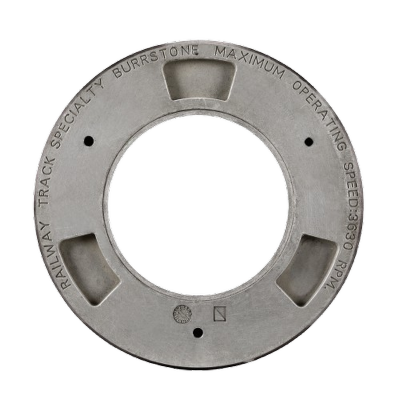
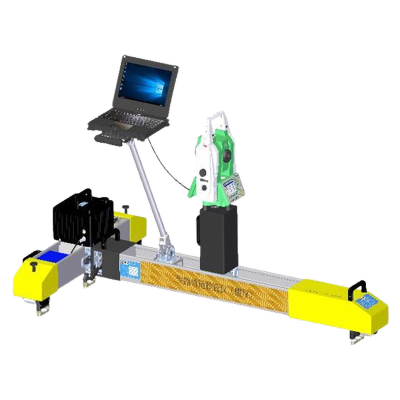
Are you looking for a reliable manufacturer of railway grinding and track maintenance equipment?
We can quickly provide customers with market analysis, technical support and customized services.
Safe Tracks Proven by China
- Name
- Phone
- *Title
- *Content