
Trolley Rail Maintenance: A Tram and Light Rail Program
A trolley rail is not a small railway. It is a grooved rail set into a street, and the pavement around it changes almost every maintenance rule that heavy rail takes for granted. The groove that lets a flange pass also catches grit, the keeper that holds the flange also wears, and the surface that carries a tram at walking pace also carries buses, delivery vans and bicycles.
Trolley rail maintenance is therefore a program rather than a set of repairs: the rail, the wheel and the pavement have to be managed as one system, on a night window, in a city that will not tolerate a closed street for a week.
Direct answer
Trolley rail maintenance is the planned care of street-running and segregated light rail track, and it is organised around five things: the grooved rail and its flangeway, the wheel-rail interface in curves tight enough to defeat steering, grinding matched to corrugation wavelength rather than tonnage, inspection that reads gauge and flangeway at a defined depth, and the pavement interface that decides how long any of it can take.
Most operators inherit a program built from mainline habits and then discover that the expensive problems do not fit those habits. Corrugation at 50 mm wavelength, keeper wear on a 30 m curve, and a rail that cannot be weld-repaired because the preheat would destroy the embedding are not mainline problems, and they do not respond to mainline answers.
What Is Trolley Rail Maintenance?
The difference from heavy rail work is where the load path goes. On a ballasted mainline the rail sits on sleepers, the sleepers sit on ballast, and a maintenance engineer can lift, tamp and line the whole assembly. On an embedded tram track the rail sits in a concrete or elastomer trough, surrounded by paving, and there is often nothing to tamp.
That single difference drives the rest. Adjustment is done at the rail, not at the track. Wear is removed by grinding and welding rather than by re-railing a worn curve. Gauge is held by the embedding and by tie bars rather than by sleeper cribs. And every intervention competes with traffic that runs on the same surface.
The Three Assets in One Program
A trolley program covers three assets that heavy rail keeps more separate.
The rail and its groove. The running surface carries the wheel tread; the groove carries the flange. Both wear, and they wear differently. Gauge face wear in a tight curve is a side-wear problem, while the running surface develops corrugation at a wavelength set by the vehicle and the trackform, not by tonnage.
The wheel. On a tram, wheel and rail are managed by the same organisation far more often than on a mainline, and that is an advantage worth using. A wheel profile that is out of tolerance will corrugate a rail within months, and a rail that is badly profiled will wear a flange flat. Neither can be fixed from one side only.
The pavement. Kerbs, paving, drainage, utility covers and crossing panels all sit within a few centimetres of the running surface. They determine access, they determine how long a repair takes, and they are the reason a tram program is often scheduled by the highway authority rather than by the operator.
Trolley Rail Maintenance vs Heavy Rail Track Care
The comparison is worth setting out because the differences are structural, not stylistic. Almost every one of them argues for a different maintenance interval, a different machine, or a different acceptance criterion.
| Attribute | Trolley and light rail | Heavy rail |
|---|---|---|
| Rail section | Grooved rail to EN 14811, 53 to 73 kg/m | Vignole rail to EN 13674, 46 kg/m and above |
| Track support | Embedded in concrete, asphalt or elastomer; slab on segregated sections | Ballast, or slab on tunnels and viaducts |
| Adjustment method | Rail replacement, grinding, weld repair, tie bars | Tamping, lining, lifting |
| Curve radius | 25 m is a design minimum; grinding machines work to about 17 m | Rarely below 250 m on plain line |
| Axle load | Around 10 to 12.5 t | 22.5 to 30 t and above |
| Vehicle wheel | Small diameter, short wheelbase, shallow flange | Large diameter, long wheelbase, deep flange |
| Dominant rail defect | Corrugation at short wavelength, side wear, wheel burn | RCF, squat, side wear on high rail |
| Grinding trigger | Surface roughness and noise, not tonnage | Tonnage and metal removal budget |
| Working window | Night, typically 3 to 5 hours, street closures | Possession, hours to a weekend |
| Noise constraint | Binding: residential limits close the window | Operating, not usually binding |
| Pavement interface | Continuous, and often third-party owned | Not applicable |
Trolley Wheel Wear Analysis and Rail Profile Checks
Wheel condition is the cheapest lever in a trolley program and the one most often left with the depot. The reason is organisational: the wheel lathe and the track gang usually report to different managers, and the corrugation that appears on the rail in March is caused by a wheel that was turned in January.
Three checks connect them.
Tread and flange profile. Measure tread hollow and flange height and thickness against the vehicle's limiting profile, not against a nominal drawing. A hollow tread concentrates contact near the gauge corner and accelerates both side wear and corrugation.
Flange back and back-to-back spacing. These set how the wheelset sits in the groove, and in tight curves they determine whether the flange or the keeper takes the lateral load. Back-to-back drift that is within the vehicle limit can still be outside what the track was set for.
Wheel flats and spalls. A flat from a single heavy braking event produces an impact at every revolution, and on a tram that impact is delivered into a pavement-supported rail with very little resilience to absorb it. Flats are the usual origin of a wheel burn on the rail head, which then becomes a corrugation seed.
Run the measurements monthly on a rotating sample and record them against chainage. The value is not in any single number but in the correlation: when tread hollow rises in a fleet, rail side wear follows two to three months later on the curves that fleet works hardest.
The Grooved Rail Asset: Flangeway, Keeper and Side Wear
The grooved profile is the defining component of trolley track, and it is worth knowing its dimensions because they set the maintenance tolerances.
EN 14811 is the European specification for grooved rail. The common profiles run from about 53 to 73 kg/m, with the 59R2 family carrying a groove of roughly 42 mm and the 60R2 family roughly 36 mm, both at a groove depth of about 45 mm, a head width of 113 mm and an overall height of 180 mm. Steel grades run from R200 through R260 to the heat-treated R290GHT and R340GHT.
| Profile | Mass | Groove width | Typical use | Note |
|---|---|---|---|---|
| 59R2 (Ri59N) | 58.2 kg/m | About 42 mm | General street running, moderate traffic | Wider groove, more forgiving of flange variation |
| 60R2 (Ri60N) | 59.8 kg/m | About 36 mm | Mixed traffic, heavier LRVs | Narrower groove, tighter tolerance on back-to-back |
| 59R1 (Ri59) | 59.0 kg/m | About 42 mm | Older networks, renewals matching legacy | R1 head geometry differs from R2 |
| 60R1 (Ri60) | 60.6 kg/m | About 36 mm | Renewal and interface work | Not interchangeable with 60R2 despite the mass |
| 73R1 | 73 kg/m | Profile-specific | City-centre tight curves, bus-sharing sections | Extra mass for the highest wear duty |
The groove width is not a free variable. It has to suit the vehicle's flange and the back-to-back spacing, and a groove that is generous for one fleet is slack for another. That is why a network running two vehicle types has to pick the profile against both, and why a renewal that copies the adjacent section's rail is not automatically correct.
Gauge and Flangeway: The Two Measurements That Drift
Tram track drifts in two directions that heavy rail does not track separately, and both are easy to measure wrongly.
Gauge. Measure between the running faces at a fixed depth below the running surface, not across the head at the top. At least one major tram operator specifies 9 mm below the top of the running surface, precisely because the head flows and the lip forms, and a gauge measured at the surface reads the flow rather than the track. Whatever depth the standard specifies, use the same depth every time, and record it, or the trend is meaningless.
Flangeway. The clear width between the running face and the keeper, measured at the depth the flange actually occupies. Flangeway closes as the keeper wears and as the groove fills, and a flangeway that has closed to the point of binding will produce climbing forces that no amount of rail grinding will correct.
The trap in tight curves is gauge widening. On heavy rail, widening a tight curve lets the wheelset steer through conicity. On a tram curve of 25 to 30 m, the wheelset is not steering through conicity at all; it is steering on the flange. Widening the gauge in that situation reduces the clearance between the flange back and the keeper, so the keeper wears faster and can fail. Gauge widening belongs only on curves large enough for flange-free curving to occur.
Why the Rail Grade Choice Is a Maintenance Decision
Heat-treated rail is the obvious answer to side wear in a tight curve, and on embedded track it carries a hidden cost.
A worn or lipped groove section can often be restored by welding rather than replaced. But welding a heat-treated grade requires preheat, and preheat at the temperatures involved will damage the rubber, polymer or asphalt that surrounds an embedded rail. The practical consequence, noted in UK tram wheel-rail interface guidance, is that rail steel for tight curves in embedded track may have to be a normal grade precisely so that wear can be rectified by welding without destroying the embedding.
That is a genuine trade: a harder rail that wears more slowly but cannot be repaired in place, against a softer rail that wears faster and can be maintained indefinitely. On a street where replacing a rail means closing the road for weeks, the second option frequently wins, and the cost model that ignores it will recommend the wrong steel.
Weld Repair and Rail Renewal in Embedded Track
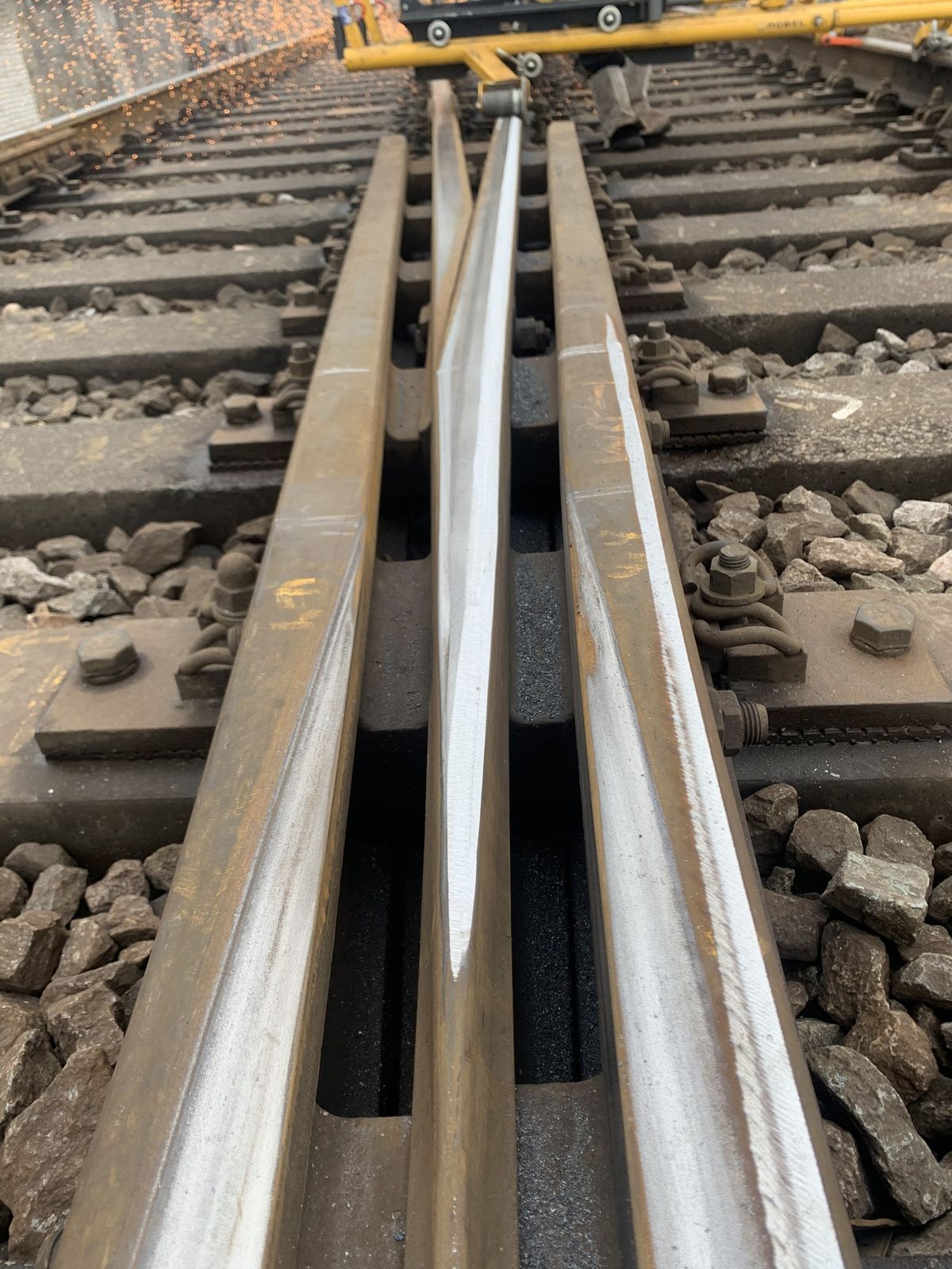
Sooner or later every embedded rail has to be replaced, and the renewal is the most expensive single event in the program. The design of the track determines how expensive, which is why maintainability belongs in the original specification and not in a post-mortem.
A rail set in a concrete trough can usually be lifted out once the surrounding paving is broken back. A rail cast into a continuous concrete slab, or bonded into an elastomer system, cannot: the embedding itself has to be cut, and the trackform rebuilt behind the new rail. The difference in cost between those two arrangements is a multiple, and it is decided years before anyone needs to renew anything.
Repair Options by Defect
Most defects do not need a new rail. Choosing the right repair is the difference between a night's work and a month's closure.
| Defect | First response | When renewal becomes necessary |
|---|---|---|
| Side wear on the gauge face of a curve | Grind the profile, consider gauge-face lubrication, monitor the rate | When remaining head width falls below the vehicle gauge requirement |
| Head lip or flow over the groove | Grind back, restore the groove edge | When the groove cannot be restored to its specified width |
| Corrugation | Grind to the intervention threshold and re-measure the spectrum | Almost never; corrugation is a surface defect |
| Wheel burn or squat | Grind out, check for a crack below the surface | If the defect extends below the depth that grinding can remove without exceeding the wear limit |
| Weld or repair failure | Cut out and re-weld with the correct grade and preheat | If the surrounding rail has been heat-affected twice already |
| Broken rail | Emergency clamp, then a welded or mechanical joint replacement | Immediately, planned as an unplanned closure |
| Worn groove in a crossing | Build up by welding, or replace the crossing unit | When build-up no longer restores the flangeway geometry |
The pattern in that table is that renewal is almost always a geometry decision, not a strength decision. Tram rail rarely fails from load; it is retired because the groove has closed, the head has worn to the limit of the vehicle's tolerance, or the running surface can no longer be restored by grinding and welding. Measuring that wear consistently is the same discipline described in our guide to rail wear measurement, with one addition: on grooved rail the groove edge is a wear surface in its own right and has to be measured with the head.
Cutting and Replacing a Street Rail
The sequence is worth stating plainly, because the durations are what a program has to plan around.
Breaking out the paving and the embedding, cutting the rail, lifting it out, setting the new rail to gauge and level at the specified depth reference, welding or jointing, reinstating the embedding, reinstating the paving, and curing before traffic. Of those, only the welding is a rail task. The rest is civil work in a street, subject to highway permits, and the curing time alone can be measured in days.
That is why the lead time for a street renewal is measured in weeks and the work itself in nights, and why a program that discovers it needs a renewal in the same month it wants to do it will pay for an emergency.
Maintaining the Option to Renew
Three design decisions preserve the ability to renew a rail without a rebuild, and all three are cheap at installation and impossible to add later.
Provide a maintainable embedding that can be broken out locally without cutting the trackform. Keep the pavement detail simple enough that reinstatement does not need a joinery specialist. And keep a record of the as-built rail position, in three dimensions, so that the new rail goes back where the old one was rather than where the surveyor guesses it was.
Light Rail Maintenance Equipment for Confined Track
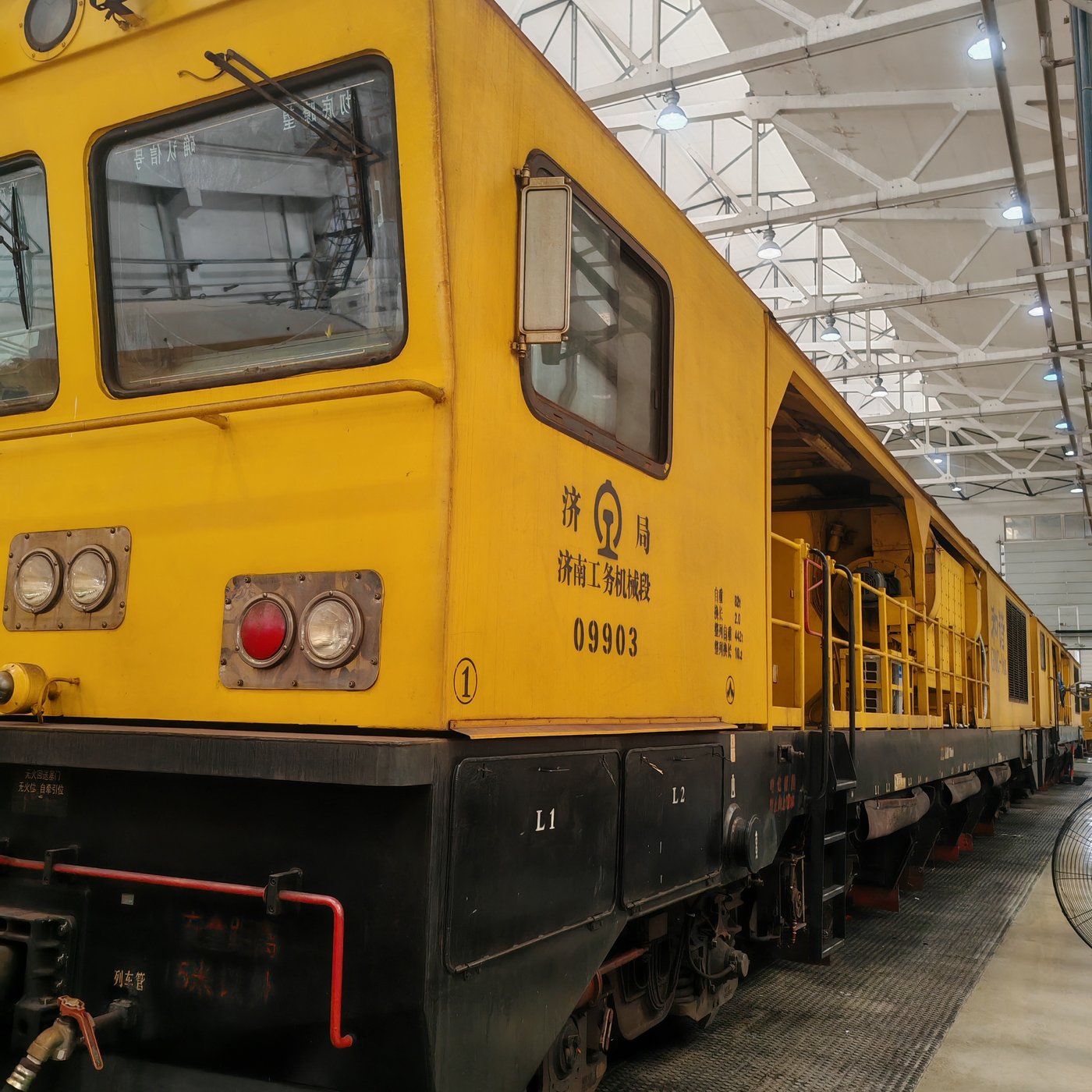
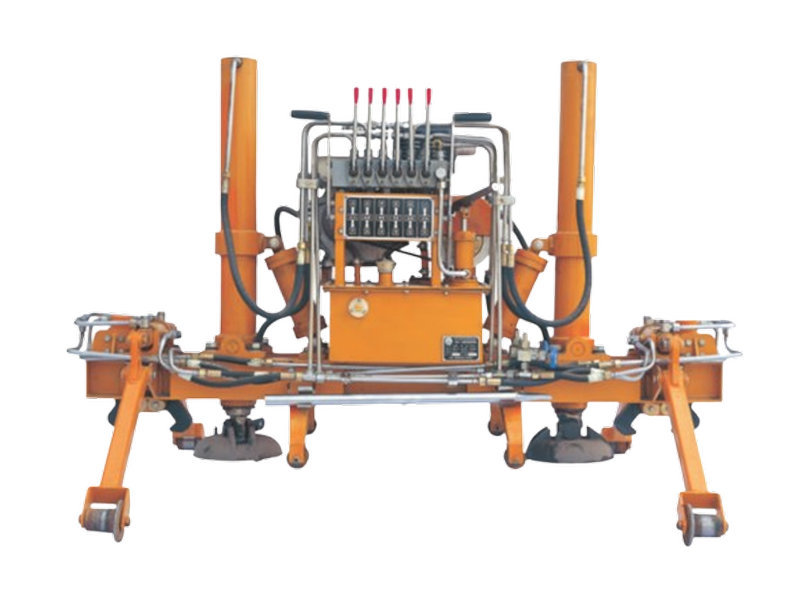
Tram track constrains equipment more than any other railway asset. There is no cess to stand on, no room to swing a boom, and no possibility of leaving a plant item on track between shifts.
| Task | Equipment | Constraint that drives the choice |
|---|---|---|
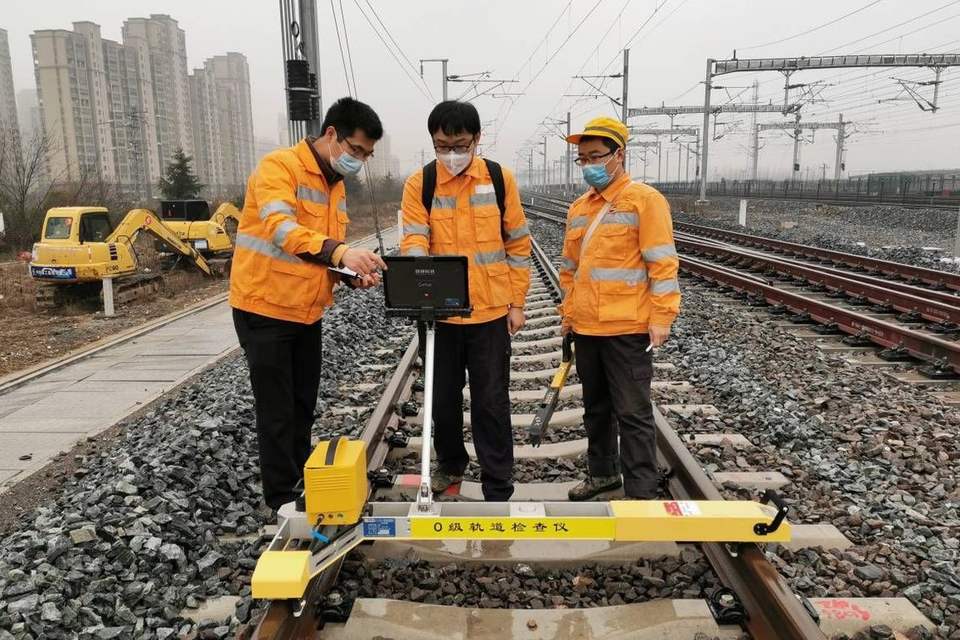
| Gauge and flangeway | Track gauge with depth-referenced measuring feet, flangeway gauge | Must read at the specified depth below the running surface |
| Rail profile and wear | Profile gauge or portable laser profile unit | Must fit within a 100 mm wide groove and a kerb line |
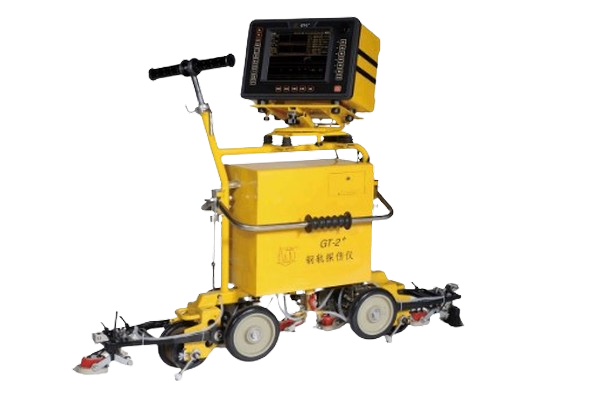
| Corrugation | Portable roughness trolley or handheld meter | Wavelength resolution down to 30 mm, not just amplitude |
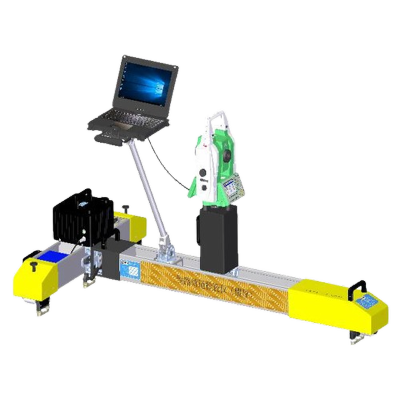
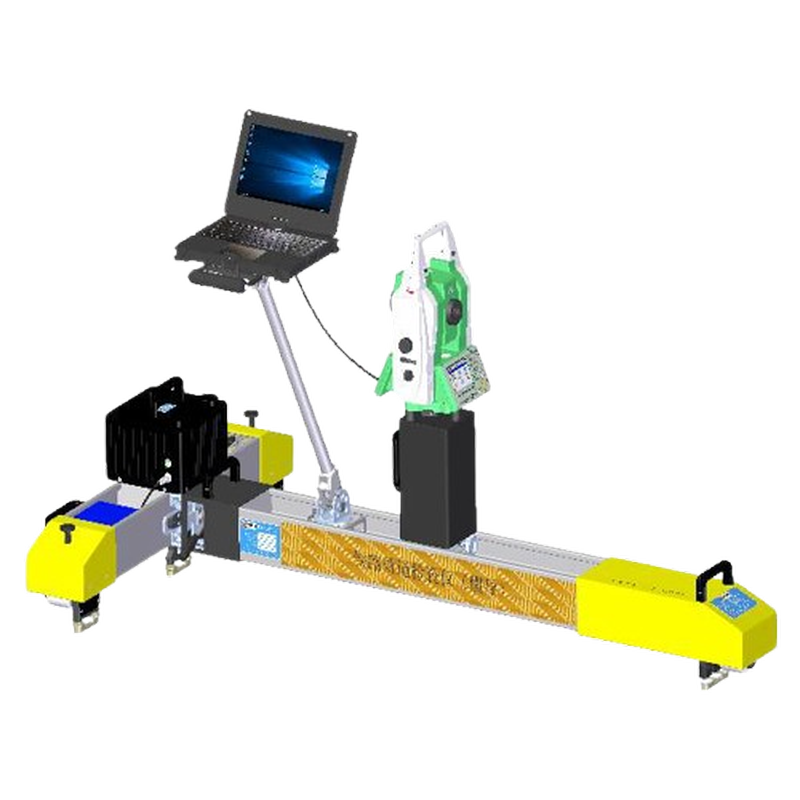
| Geometry | Lightweight track geometry trolley | Must be lifted off by two people at a road crossing |
| Grinding | Compact oscillating or rotating stone grinder | Curve capability to about 17 m radius; dust and spark containment |
| Weld repair | Portable welder, profile grinder, preheat control | Preheat must not damage the embedding |
| Fastening and gauge | Tie bar installation, clip tools | Tie bars only in pairs or groups, never singly |
| Crossing and flangeway | Frog and flangeway wear gauge | Depth and width both, at the wheel contact position |
Two equipment notes are worth more than the table.
The first is the gauge. A standard mainline track gauge cannot measure tram track properly, because the reference is the running face at a set depth and the surface is buried in paving. A gauge that reads to the wrong reference produces a number that looks precise and is not comparable with the design value.
The second is the trolley. A geometry trolley for tram work has to be light enough to be carried across a live road junction and set down on a rail head that is flush with the pavement. Anything that needs a lifting frame will not be used at 02:00 on a street with a four-hour closure.
This section stops at what the work requires. Two other guides carry the purchasing side: the railway maintenance equipment procurement checklist covers requirement definition, factory audit and life cycle cost, and the railroad track maintenance tool list covers hand tools, weights and kits by gang size. Neither covers tram track; both apply once the specification is settled.
Working Inside the Groove
The groove itself is a maintenance item that mainline crews never meet. It fills with grit, rubber dust from tyres, leaf litter and, in wet weather, silt that compacts into a hard paste at the bottom.
A blocked groove does two things. It lifts the flange onto material that was never meant to carry load, and it traps water against the rail foot and the embedding, which is where corrosion starts on an embedded rail and where it is least visible.
Clearing the groove is not a glamorous task and it is routinely deferred, which is why it shows up later as a flangeway measurement that has closed without anyone changing the track. Put it on the routine schedule with a defined acceptance: groove clear to the bottom over the measured length, no compacted material at the flange contact zone.
Transit Rail Grinding Windows and Night Work
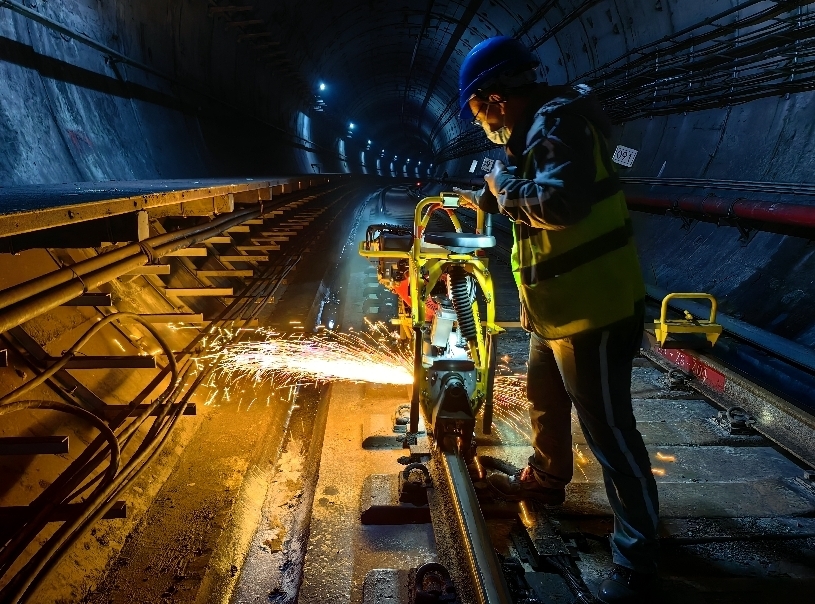
Grinding is where a trolley program is won or lost, and the constraints are urban rather than metallurgical.
The grinding itself is treated in detail in our guide to subway rail grinding. What matters for trolley track is that the defect being controlled is different from mainline corrugation and that the acceptable methods are narrower.
Tram rail develops corrugation at wavelengths in the 30 to 300 mm band, with grooved rail in urban systems commonly showing patterns around 50 mm. That is short enough to be invisible on a walk-through inspection and loud enough to generate complaints from residents three floors up. The commonly used intervention threshold for longitudinal profile defects is a depth of 0.10 mm, which is a measurement, not a judgement.
The wavelength tells you the mechanism, and the mechanism tells you whether grinding will hold. A pattern in the region of 50 mm on a street section is usually a resonance effect rather than a traffic effect: the unsprung mass of the vehicle bouncing on the track stiffness, the rail vibrating between supports, or the trackform itself resonating at a frequency the passing speed converts into a wavelength. Those mechanisms do not disappear because the rail was ground, which is why a tram program that grinds without recording the wavelength tends to grind the same sections twice as often as it needs to.
| Method | Metal removed | Working speed | Noise outcome | Can it run in service |
|---|---|---|---|---|
| Sliding stone | Micron range | Up to 30 km/h | Smooth surface achieved | Yes, in some cases |
| Rotating stone | Up to 0.2 mm per pass | Slow, on-track | Rougher surface, more noise after | No |
| Oscillating stone | More than sliding, less than rotating | On-track | Lowest noise outcome | No |
The distinction that matters commercially is the sliding method. A grinding method that can work at up to 30 km/h and remove only microns is not a substitute for reprofiling, but it can be deployed during operating hours, which means it does not compete for the four-hour night window that everything else in the program needs. Networks that treat all grinding as night work are paying for access they did not have to spend.
Noise Is the Acceptance Criterion
On a mainline, grinding is accepted against profile and surface finish. On a tram in a residential street, it is accepted against noise, because that is what the residents will measure and what the regulator will act on.
Three practical consequences follow.
Grind before the surface is loud enough to complain about. A program that responds to complaints is always behind, because the corrugation that produces the complaint has been growing for months.
Record roughness spectra, not just roughness values. The wavelength band that is driving the noise tells you whether the cause is vehicle resonance, trackform stiffness or friction, and each has a different fix.
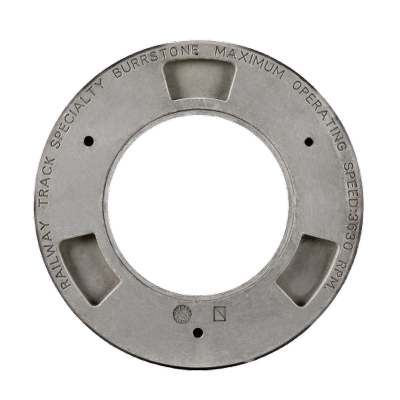
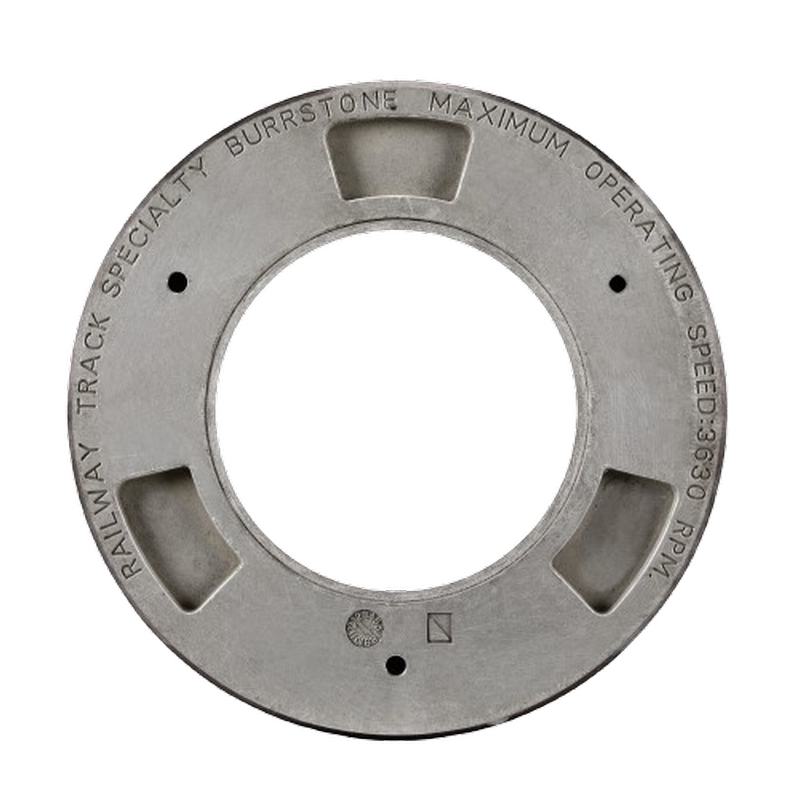
Accept the work against a stated standard. EN 13231-3 is the European reference for acceptance of rail grinding, milling and planing work in track, and a contract that does not name an acceptance standard will be settled by argument. The finish that standard measures is produced by the abrasive, so the wheel specification belongs in the acceptance discussion and not only in the purchasing one.
Trolley Rail Maintenance Checklist
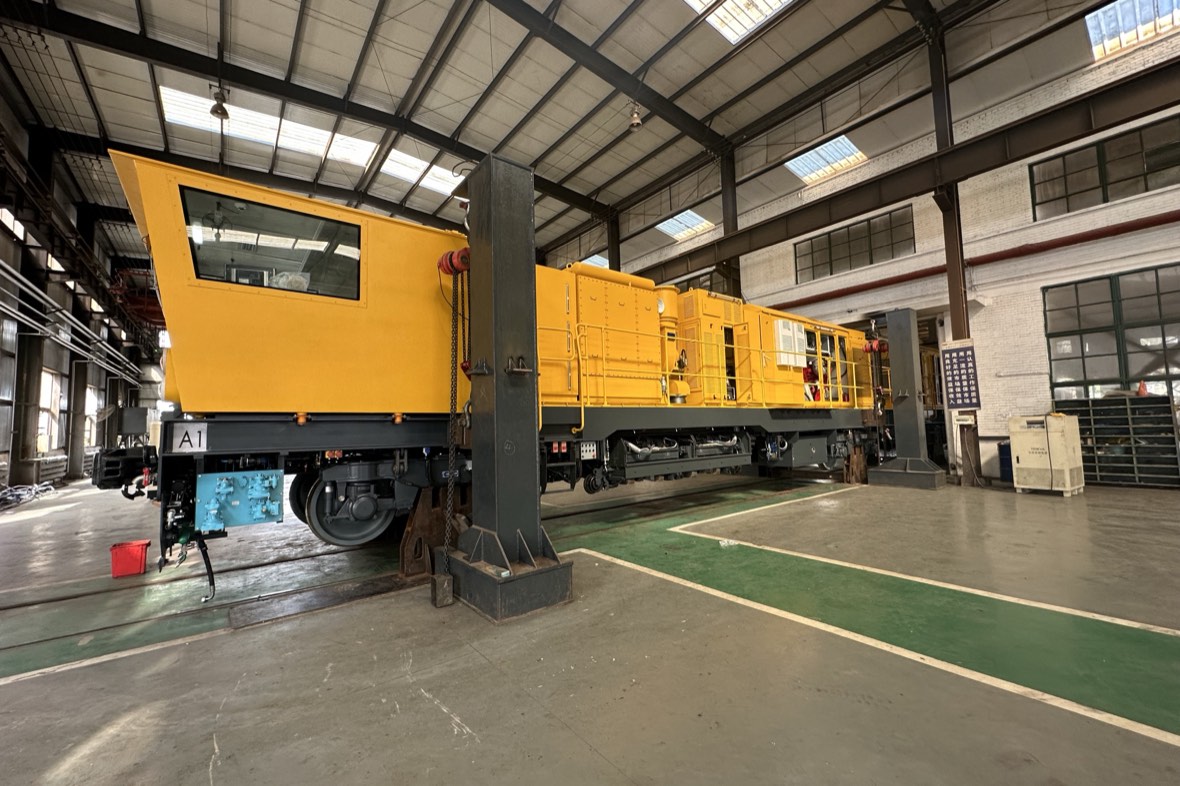
The checklist below is deliberately short. A trolley program that generates a 200-line inspection form produces completed forms and no action; six categories with defined acceptance criteria produce decisions.
| Frequency | Item | Acceptance | Record |
|---|---|---|---|
| Weekly | Groove clearance and flangeway | Clear to bottom; flangeway within drawing tolerance | Blocked locations and lengths |
| Weekly | Visual walk of street sections | No lip, no wheel burn, no loose paving at the rail | Photo and chainage |
| Monthly | Gauge at the specified depth | Within design tolerance, trend recorded | Chainage, value, temperature |
| Monthly | Side wear and head wear | Within limits for the profile and the vehicle gauge | Wear depth, curve number |
| Monthly | Wheel sample: tread, flange, back-to-back | Within vehicle limiting profile | Fleet, vehicle, position |
| Quarterly | Corrugation spectrum | Peak depth below the intervention threshold | Wavelength band, depth, chainage |
| Quarterly | Fastening, tie bars, embedding | No movement, no cracked embedding, no corrosion staining | Location and defect type |
| Quarterly | Crossing and flangeway wear | Depth and width within limits | Crossing ID, measurement |
| Annual | Weld and repair condition | No cracking, no sinking at repairs | Repair register |
| Annual | Program review | Defect rate and cost per kilometre trending | KPI pack |
How to Read the Checklist as a Budget
Each line has a cost, and the cheapest lines are at the top. Groove clearing and gauge measurement cost almost nothing and prevent failures that cost a street closure. Quarterly corrugation measurement costs a shift and prevents a grinding campaign being planned on impression rather than data.
The line that most programs cut first is the wheel sample, because it belongs to the depot and the depot is not in the track budget. That is exactly backwards. Wheel measurement is the cheapest control on rail wear in the entire program.
Managing Trolley Rail Maintenance in Mixed Traffic
Most of the difficulty in a trolley program is not technical. It is that the asset is in a street, and the street has other owners.
Three constraints recur.
Access. A street closure has to be agreed with the highway authority, planned around bus routes, deliveries and events, and advertised. The lead time is measured in weeks, not shifts, and a program that discovers a defect on Tuesday cannot work on it on Thursday.
Third-party damage. Kerb strikes, vehicle impacts on the rail head, utility works that cut into the embedding, and resurfacing that raises the pavement above the running surface. Each is a defect the operator did not cause and cannot prevent, and each has to be documented well enough to be recovered. Networks that also run conventional track will recognise the reporting discipline from the track maintenance guide, though the recovery route is different: here the counter-party is a highway authority, not a train operator.
Utility and drainage interaction. Water that drains into the groove instead of the gully accelerates both corrosion and groove blockage. A resurfacing scheme that changes the cross-fall by a few millimetres changes where the water goes for the next twenty years.
Crossing the Street: the Pavement Interface
Two places concentrate almost all mixed-traffic risk.
Road crossings and junctions. Here the rail is crossed by road vehicles at an angle, the flangeway is a hazard to bicycle wheels, and the pavement joints open under traffic. The maintenance items are flangeway width, joint tightness and the level relationship between rail and pavement.
Curves at intersections. A tight curve that also carries turning road traffic collects rubber and grit in the groove, and the same curve is where side wear is highest. These locations need their own interval rather than the network average, because they deteriorate several times faster.
The practical fix is to define a small number of "critical locations" by geometry and traffic, and to inspect those on a shorter cycle with tighter acceptance than the rest of the network. A uniform interval across a tram network guarantees that the critical locations are inspected too rarely and the easy ones too often.
Segregated Sections Behave Differently
Most modern tram networks are a mixture: street running in the city centre, segregated reservation or former rail corridor in the suburbs, and a depot at one end. Treating that mixture as one asset produces intervals that suit none of it.
A segregated section on ballast or a resilient slab behaves much more like a light railway. It can be tamped or lifted, corrugation grows more slowly, and the binding constraint is tonnage rather than noise. A street section cannot be tamped at all, corrugation grows quickly because the support is stiff, and the binding constraint is the closure.
The practical consequence is that a program should have at least two interval sets, and should assign each section to one of them by trackform rather than by line. A single line can contain both, and the depot throat usually contains a third case: very tight curves, no traffic, and the highest side wear on the network.
What the Program Measures: KPIs and Records
A trolley program is judged on four things, and only four.
| KPI | Definition | Why it is the right measure | Typical failure of the metric |
|---|---|---|---|
| Wear rate | Side wear depth per million gross tonnes, by curve class | Predicts renewal date and justifies rail grade choice | Averaged across curve classes, so it hides the problem curves |
| Corrugation growth | Wavelength band and depth against time | Sets the grinding interval on evidence | Reported as a single roughness number |
| Grinding conformance | Percentage of ground length meeting the acceptance standard | Measures the work, not the activity | Measured on a sample chosen by the contractor |
| Defect closure | Time from identification to rectification, by defect class | The only measure of the program actually working | Averaged across all classes, so urgent work hides in the mean |
| Complaint rate | Noise complaints per route kilometre per year | The externally imposed measure | Treated as a communications issue rather than a technical one |
Records have to survive a specific question: for the curve at this junction, what was the side wear two years ago, what did we grind, and did the grinding change the growth rate. If that takes a week of email, the program is running on memory.
The minimum record set is small: gauge and flangeway by chainage with the measurement depth, side and head wear by curve, corrugation spectra by section, every grinding run with its metal removal and acceptance result, and every weld repair with the grade and the preheat used.
What a Trolley Program Costs, and Where the Money Goes
A tram program is cheap per kilometre and expensive per closure. The annual routine work is a small number; the events are large, and they arrive irregularly.
| Cost line | Driver | Why it moves |
|---|---|---|
| Routine inspection | Network length and interval | Linear, and the easiest line to model |
| Groove clearing and paving upkeep | Street length, tree cover, drainage | Seasonal, and worst in autumn |
| Grinding | Corrugation growth rate and access method | Step change if a sliding method can be used in service |
| Wheel maintenance | Fleet size and wheel lathe availability | Shared with the depot budget, which is why it gets cut |
| Weld repair | Number of repairable defects and the grade | Doubles if the grade needs preheat the embedding cannot take |
| Rail renewal | Geometry-driven, in street sections | The largest single line, and the one a program usually underestimates |
| Traffic management | Closure hours and highway requirements | Scales with closures, not with track work |
Three observations follow from that structure.
Routine work is not where the money is. A program that optimises inspection intervals saves a modest amount; a program that avoids two street renewals by managing wear and grinding saves multiples of the entire inspection budget.
The most expensive decisions are made in design. Rail grade, embedding type, pavement detail and curve layout all set the future cost of ownership, and all are fixed before the first tram runs.
The cheapest lever is the one that is easiest to defer, which is why wheel maintenance gets cut first and shows up later as rail wear that nobody attributes to it.
Buying a Program Rather Than a Machine
When a tram operator buys outside help, the useful question is not what a grinding machine costs per shift. It is what the supplier is accountable for after the shift: metal removal achieved, acceptance against a named standard, roughness spectrum re-measured, and a record that can be compared with the previous run.
A supplier who is paid per pass has an interest in taking more metal than the surface needs. A supplier who is paid per accepted section, against a stated spectrum and a stated profile, has an interest in taking exactly what is needed. The second contract is usually cheaper over a decade, even at a higher rate per night.
Trolley Rail Maintenance FAQ
How often should tram rails be ground?
On condition, not on a calendar. The interval is set by how fast the corrugation spectrum reaches the intervention threshold, which on a busy street section can be months and on a segregated section with good trackform can be years. A network grinding on a fixed annual cycle is either grinding some sections too early, wasting rail life and access, or too late, which is when the noise complaints start.
Why does tram rail corrugate so much faster than mainline rail?
Because the wavelength-fixing mechanisms are different and the damage mechanism is usually wear rather than fatigue. Tram vehicles have short wheelbases and small wheels, they accelerate and brake hard and often, and their track is supported by a stiff embedded structure. That combination produces short-wavelength corrugation in the 30 to 300 mm band, and grooved rail in urban systems commonly settles around 50 mm, where it is both loud and difficult to see.
Can gauge widening be used on tight tram curves?
Only on curves large enough for flange-free curving to occur. On a 25 to 30 m curve the wheelset steers on its flange, not through conicity, so widening the gauge simply reduces clearance between the flange back and the keeper, which increases keeper wear and can lead to failure. This is the opposite of mainline practice, and it is a common error when a tram network is maintained by people trained on heavy rail.
Why can a heat-treated rail not always be weld-repaired in street track?
Because weld repair on a heat-treated grade needs preheat, and the preheat temperature will damage the rubber, polymer or asphalt embedding that surrounds the rail. On embedded track the choice between a harder rail and a repairable rail is a real maintenance decision, and on a street where rail replacement means weeks of road closure the repairable option is often the better whole-life answer.
How do you measure gauge on embedded tram track?
Between the running faces, at a fixed depth below the top of the running surface, and always at the same depth. One major operator specifies 9 mm below the surface. Measuring at the top of the rail reads the head flow and the lip rather than the track, so the numbers are not comparable with the design value and the trend is meaningless.
What is the single most useful measurement in a trolley program?
Corrugation depth by wavelength band, recorded by chainage and repeated on a consistent interval. It is the one measurement that predicts noise, sets the grinding interval, and shows whether a change of wheel profile or trackform actually worked.
Why does a street section corrugate faster than a segregated one?
Because the support is stiffer and the damage mechanism is wear. An embedded rail cannot deflect, so the dynamic force from a passing wheel goes into the surface rather than into the track structure, and any irregularity is reinforced at every pass. A segregated section with a resilient trackform dissipates part of that energy and grows corrugation more slowly, which is why the same rail grade lasts longer in the suburbs than in the city centre.
Can mainline grinding machines be used on tram track?
Rarely. The constraints are curve radius, height, and the presence of a street. A machine that cannot work below about 17 m radius will miss the curves that need grinding most, and a machine that needs the track cleared cannot be deployed in a mixed-traffic street without a full closure. Compact units and hand-guided machines are slower per metre and often the only option that fits.
Building a Trolley Program That Survives the Street
The technical content of a trolley program is well understood. The failures are almost always in the interface between the track, the vehicle and the street, and in whether the program measures the right things often enough to act before a defect becomes a closure.
We supply the grinding and maintenance side of that work, from compact grinders that can work a curve and a crossing to the abrasives that finish a groove section to an acceptance standard, alongside the rail maintenance solution that sets out how inspection, grinding and repair fit into one cycle. The rail grinding solution page covers how a grinding campaign is scoped and accepted, and the railway maintenance tools and railway inspection tools ranges carry the gauges and instruments the checklist above depends on.
For the machine side, our railway grinder machine range includes compact and battery-powered units intended for confined and street-adjacent work, and the grinding training programme covers finishing to an acceptance standard rather than to appearance. If you are setting up a tram or light rail program and the question is which measurements to start with, send us the network layout and the vehicle profile and we will work through the interval logic with you.