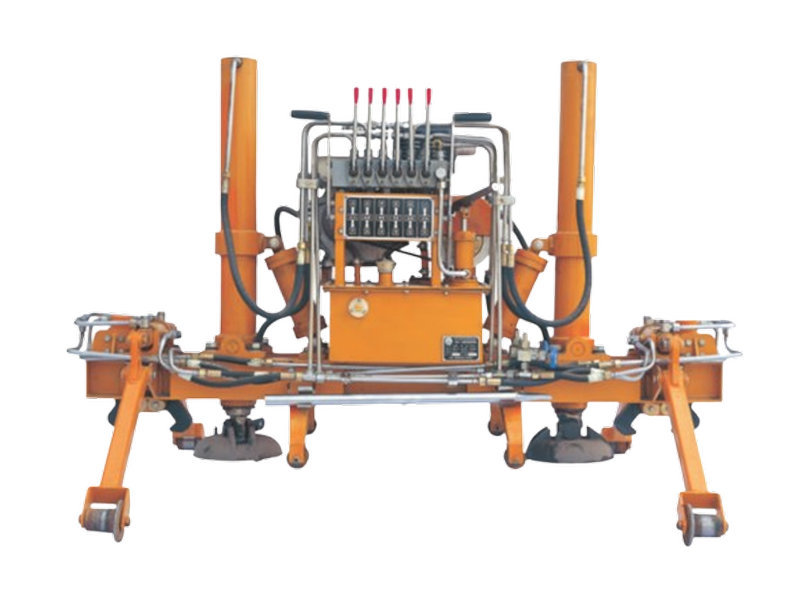
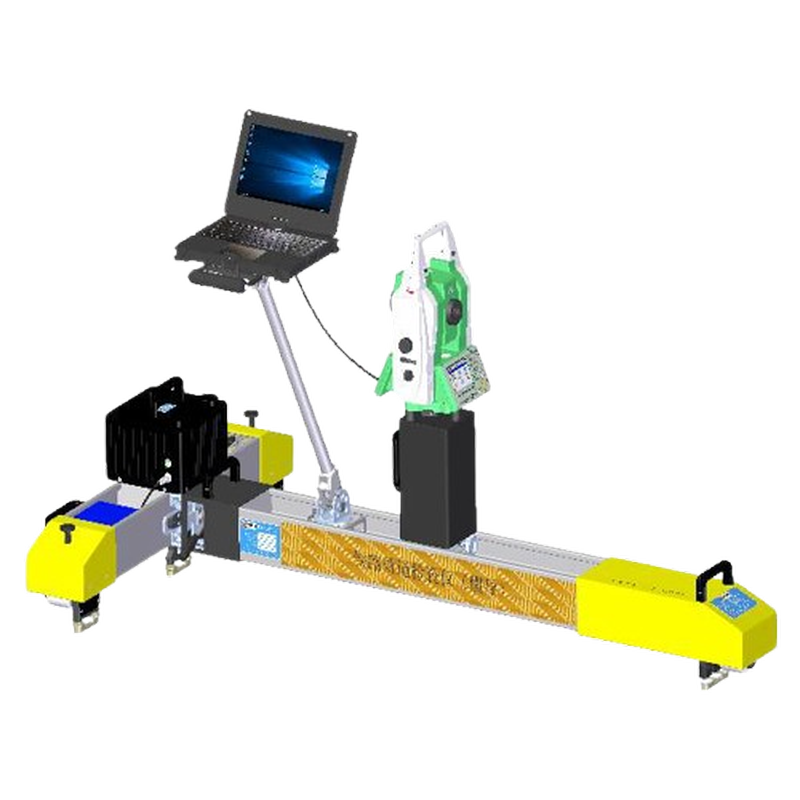

Railway Maintenance Machinery Market: Tenders and Channels
Ask four research houses for the size of the railway maintenance machinery market and you get four numbers between USD 4.57 billion and USD 6.42 billion for the same year. That spread is 1.4 times, and it is small. The service side of railway maintenance shows a five-fold spread over the same period, because services have fuzzy boundaries. Machines do not. A tamper is a physical object with a serial number, so the disagreement here is narrower and easier to resolve.
What the numbers still do not tell a buyer is what to put on their own line. A global figure of USD 5.9 billion, growing at 8.2 per cent, describes an industry. It does not describe the machine a 400 km freight corridor needs, or why the specification that corridor writes will decide which three suppliers can even bid. This article covers the segments that make up the market, the four channels through which machines actually arrive, and the part of the market that no forecast models: what a tender document does to the supplier list before a single machine is offered.
Direct answer
The railway maintenance machinery market covers the machines that inspect, correct, renew and maintain track infrastructure: tampers, stabilisers, ballast cleaners, rail handling and renewal trains, grinding and milling machines, and the vehicles that carry overhead line work. Published estimates for 2025 range from about USD 4.57 billion to USD 6.42 billion, with compound growth forecasts clustered between 5.5 and 8.2 per cent. The spread comes mainly from whether aftermarket, refurbishment and service contracts are counted inside the market or beside it.
What the Railway Maintenance Machinery Market Actually Counts
The four widely quoted estimates are worth putting side by side, because the differences are instructive rather than embarrassing.
| Estimate for 2025 | Publisher's scope | CAGR | Horizon | What it most likely counts |
|---|---|---|---|---|
| USD 4.57 billion | Machinery by product type, tracked and non-tracked | 5.47% | to 2034 | New machine sales, segmented by machine family |
| USD 4.79 billion | Machinery, split by product, end user and sales type | 5.90% | to 2034 | New sales plus aftermarket, government and private operators |
| USD 6.42 billion | Machinery by product, channel, technology and end user | 5.96% | to 2034 | New and aftermarket, with automation graded in |
| USD 5.90 billion | Machinery including track laying and overhead line vehicles | 8.20% | to 2035 | Broadest scope, includes renewal systems and catenary vehicles |
Two things follow from that table. The first is that the growth forecasts are tightly clustered, 5.5 to 6.0 per cent for three of the four, with only the broadest-scope estimate reaching 8.2 per cent. A market can disagree about its own size and still agree about its direction, and this one does.
The second is that the two ends of the range are asking different questions. The low estimate counts machines. The high estimate counts machines plus the ecosystem of parts, rebuilds and service around them. If you are buying, the low number is the one that describes your negotiating position, because it describes how many other buyers are competing for the same production slots. If you are supplying, the high number is the one that describes your business.
There is a regional argument in the same data that matters more than the total. On the narrow estimates Asia Pacific leads with around 35 per cent of revenue, on others Europe leads with around 34.6 per cent, and North America sits between 24 and 30 per cent depending on where Mexican and Canadian work is counted. All three are within a few points of each other. This is not a market with a dominant region; it is a market with three mature purchasing blocs and a set of fast-growing smaller ones.
The Unit Number That Explains the Value Number
One published estimate puts unit demand at 1,070 machines in 2025 rising to 1,853 by 2035, a CAGR of about 5.5 per cent, against value growth of 8.2 per cent over the same period. Value is growing roughly half again as fast as units.
That gap is the single most useful fact in the whole dataset, because it tells you what the industry is actually selling. It is not selling more tampers. It is selling tampers that measure, record, self-correct and report, and charging for the software and the sensors that make that possible. A twenty-year-old two-sleeper tamper and a current model do the same physical job; what separates them is that one produces a geometry record you can hand to an auditor and the other produces a printout nobody trusts.
For a buyer, that changes the calculation. The question is no longer whether the new machine tamps better, because on a good day both will. The question is whether the measurement and documentation the new machine produces is worth the difference in price, and that depends entirely on whether your regulator, your client or your insurer has started asking for it.
The Machine Families and Who Buys Them
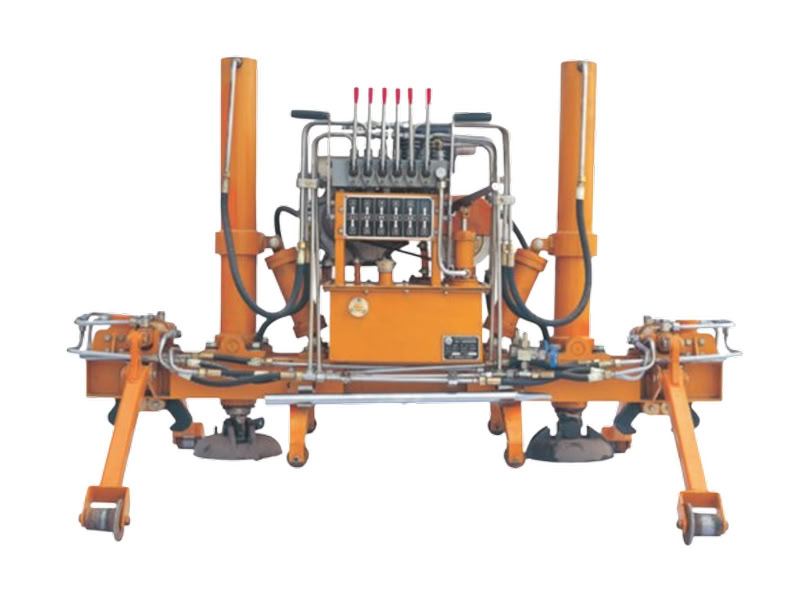
The market segmentation published by every research house is product-based, and the product list is remarkably consistent: tamping machines, stabilising machinery, ballast cleaning machinery, rail handling machinery, surfacing machinery. That taxonomy is useful for sizing a market and almost useless for buying from one, because it groups machines by what they do rather than by who can afford them.
A more useful split for a buyer is by dependency. Some machines cannot be replaced by anything except a possession and a machine. Others have a manual or contracted substitute that costs more per unit of work but requires no capital.
| Family | Representative types | Who typically owns it | Replacement cycle | Substitute if you do not own one |
|---|---|---|---|---|
| Tamping and stabilising | Production tamper, turnout tamper, dynamic track stabiliser | Infrastructure manager, large contractor | 20 to 30 years, mid-life rebuild | Contracted tamping campaign, or manual packing at far lower output |
| Ballast | Ballast cleaner, ballast regulator, undercutter | Infrastructure manager | 25 to 35 years | Contracted cleaning campaign; regulator work sometimes done by hand |
| Rail handling and renewal | Track renewal train, rail crane, rail handling unit | Infrastructure manager, specialist renewal contractor | 20 to 30 years | Contracted renewal, or labour-intensive panel replacement |
| Grinding and milling | Grinding train, modular grinder, turnout grinder, milling machine | Infrastructure manager, grinding service provider | 15 to 25 years for trains; 8 to 15 for small units | Contracted grinding service, which is the dominant model in several markets |
| Surfacing and lining | Tamping with lifting and lining, specialist lining machines | Infrastructure manager | 20 to 30 years | Manual lifting and lining, slow and geometry-limited |
| Inspection and measurement | Geometry car, track inspection vehicle, trolley | Infrastructure manager, certification body | 10 to 15 years, faster on electronics | Contracted survey, or portable equipment |
| Overhead line | Catenary maintenance vehicle, tower car | Electrified network operator | 20 to 30 years | Contracted access from road plant |
The dependency column is where the commercial decision lives. A grinding train competes with a grinding contract, and in several markets the contract won. A tamper competes only with a slower, worse tamper or with manual labour, which is why tampers remain the largest single segment at roughly 37 per cent of the market by product.
Tamping and the Machines That Cannot Leave the Track
Tamping is the clearest case of a machine with no real substitute. A tamper lifts the track, packs ballast under each sleeper and corrects geometry in the same pass. Modern production tampers work in continuous action, with a moving satellite frame carrying the tamping units while the main frame advances, and achieve production rates of 2,800 to 4,000 feet per hour on plain line depending on track condition.
A current universal tamper illustrates how far the specification has moved. The Plasser & Theurer Unimat 09-4x4/4S tamping units run at 35 Hz with a 5 mm amplitude, use 16 tilting tines to reach through a turnout, carry a three-rail lifting unit to distribute lift forces across a long switch, and stay under 20 tonnes axle load. It is offered with more than a hundred configuration options and, in its most recent form, with a hybrid drive that allows fully electric travel and working.
That last detail is not marketing. A machine that works in an emissions-constrained urban corridor and one that works on a remote freight branch are the same machine with different drive architecture, and the drive decides which tunnels, depots and city centres the machine can enter. It is the kind of thing that appears in a tender as a clause about operating in enclosed spaces and then quietly eliminates every supplier who did not develop it.
Ballast, Renewal and the Machines That Rebuild
Ballast cleaning and track renewal are the two families where the machine is not maintaining the track but replacing part of it. A ballast cleaner digs out fouled ballast, screens it, returns the usable stone and discharges the fines, all while the track is lifted and supported. A renewal train takes out rail, sleepers or both and puts new ones back in one continuous operation.
These machines are bought almost exclusively by infrastructure managers, for a structural reason: their output is measured in kilometres per possession, and a possession is a thing only the infrastructure manager can grant. A contractor can own one, and several do, but the contractor's business depends on access that the asset owner controls. That asymmetry shapes the whole commercial relationship, and it is why renewal trains are rarely sold to anyone who is not either a national infrastructure manager or a very large specialist contractor with framework agreements in place.
The economics of these families also explain why the aftermarket share of the market keeps rising. A ballast cleaner is a 25 to 35 year asset with a rebuild at mid-life. When a fleet reaches that point, the choice is a rebuild, a replacement or a reduction in capability, and a rebuild is usually the cheapest of the three by a wide margin. Suppliers have noticed, and lifecycle support is now a larger business than new machine sales for more than one manufacturer.
Grinding and Milling: The Profile Trade
Rail grinding is the one family where the machine has a serious commercial rival that is not another machine. A grinding service provider arrives with a train, works a possession and leaves, and the infrastructure manager never carries the capital. In several markets that model dominates to the point where grinding trains are bought by service companies rather than by network owners.
The technical reason grinding is separable this way is that the work is a function of access and control, not of asset ownership. A mill or a grinding train needs the track, a window and a profile target, and all three can be supplied by the client. The commercial reason is that grinding capacity is lumpy: a train removes a lot of metal quickly, so a network with moderate corrugation growth either buys more capacity than it needs or buys none and contracts.
That split matters for suppliers of the consumable. A grinding contract is priced per kilometre or per pass, which puts the abrasive under direct cost pressure in a way that an in-house programme rarely does. The machine builder and the wheel supplier end up in the same negotiation, and the acceptance class in the contract decides how much of both are consumed. The relationship between grinding length and acceptance class is set out in our guide to grinding length at weld seams, and it applies to whole-track grinding in the same way.
How the Market Is Sold: Four Channels
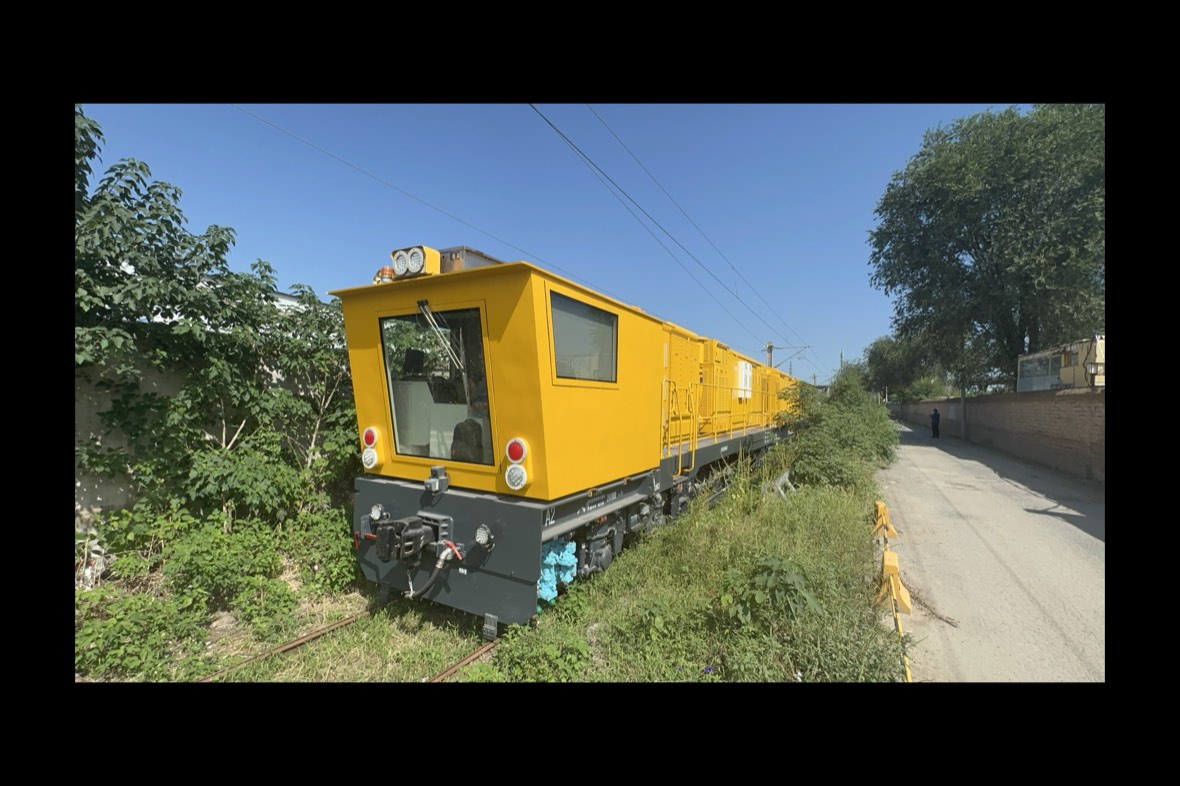
Machines reach operators through four channels, and the channel matters more than the brand for everything except the largest fleets.
| Channel | What it looks like | Capital effect | Response time | Typical buyer |
|---|---|---|---|---|
| Direct from manufacturer | Negotiated specification, factory acceptance test, training | Full capital cost, multi-year lead | Slow to buy, fast to support | National infrastructure manager, large contractor |
| Regional dealer or agent | Stock or near-stock machines, local service | Full capital cost, shorter lead | Fast to buy, variable support | Mid-size operator, industrial railway |
| Refurbished | Inspected and rebuilt used machine with warranty | 40 to 60 per cent of new, depending on scope | Weeks to months | Operator with capability but no budget |
| Rental or contracted service | Machine and crew supplied per campaign | Operating cost only | Immediate within availability | Operator with intermittent need |
The published market data supports the direction of travel rather than the detail: aftermarket sales are forecast to grow faster than new sales, at around 7.6 per cent against 5.9 per cent on one estimate. That is what a market looks like when the installed base is ageing and the price of a new machine is rising faster than the work it does.
The choice between the three capital routes turns on four questions, and the answers usually point to one of them without much argument.
| Question | Buy new | Buy refurbished | Rent or contract |
|---|---|---|---|
| Is the work continuous or in campaigns? | Continuous, all year | Continuous, all year | Campaigns, or one season a year |
| Can you support it yourself? | You have fitters and a workshop | You have fitters and a workshop, and accept more downtime | Neither, and you do not want to build them |
| Is a possession yours to schedule? | Yes, on your own network | Yes, on your own network | No, the access belongs to someone else |
| Does the machine shape your cost base? | Yes, it is in your asset register for 25 years | Yes, but a shorter horizon | No, it is a line in operating cost |
The pattern is that the third question decides most cases. An operator who cannot grant their own possession is buying a machine they cannot fully use, and that is as true of a compact grinder as it is of a tamping train.
The Second-Hand Market Nobody Forecasts
No research house publishes a credible figure for the second-hand railway maintenance machinery market, and the reason is structural: most transactions are private, the condition grading is not standardised, and much of the trade happens inside framework relationships rather than through listing platforms.
The market exists and is substantial. Manufacturers run their own used-machine operations, listing machines with year of manufacture, gauge, weight, engine output and travel speed, and offering upgrades and retrofits. A 1996 two-sleeper tamper at 69 tonnes with a 348 kW engine is a normal listing. What is being sold is not a museum piece but a machine that a mid-size operator can put into service this quarter.
Two conditions decide whether a second-hand purchase is sane, and neither is in the listing.
The first is whether the machine can still be approved. Machines are vehicles, and vehicles must comply with the standards that govern running on the network. The European reference for track machines is EN 14033, and machines intended for interoperable networks may need compliance with the TSI for locomotives and passenger rolling stock. A twenty-year-old machine may be perfectly sound mechanically and still be unable to obtain approval on the network it is meant to serve, because the approval regime has moved since it was built.
The second is whether the control system can still be supported. Electronics age faster than steel. A machine whose measuring and control electronics are two generations old can be mechanically excellent and commercially useless, because nobody stocks the boards and the software that reads its geometry output no longer exports a format the client accepts. This is the failure mode that catches buyers who inspected the machine carefully and never asked about the diagnostics.
The remedy is unglamorous: ask for the approval file and the control-system support commitment before you inspect the iron. Both are documents, and a seller who cannot produce them is telling you something.
What a Tender Specification Really Decides
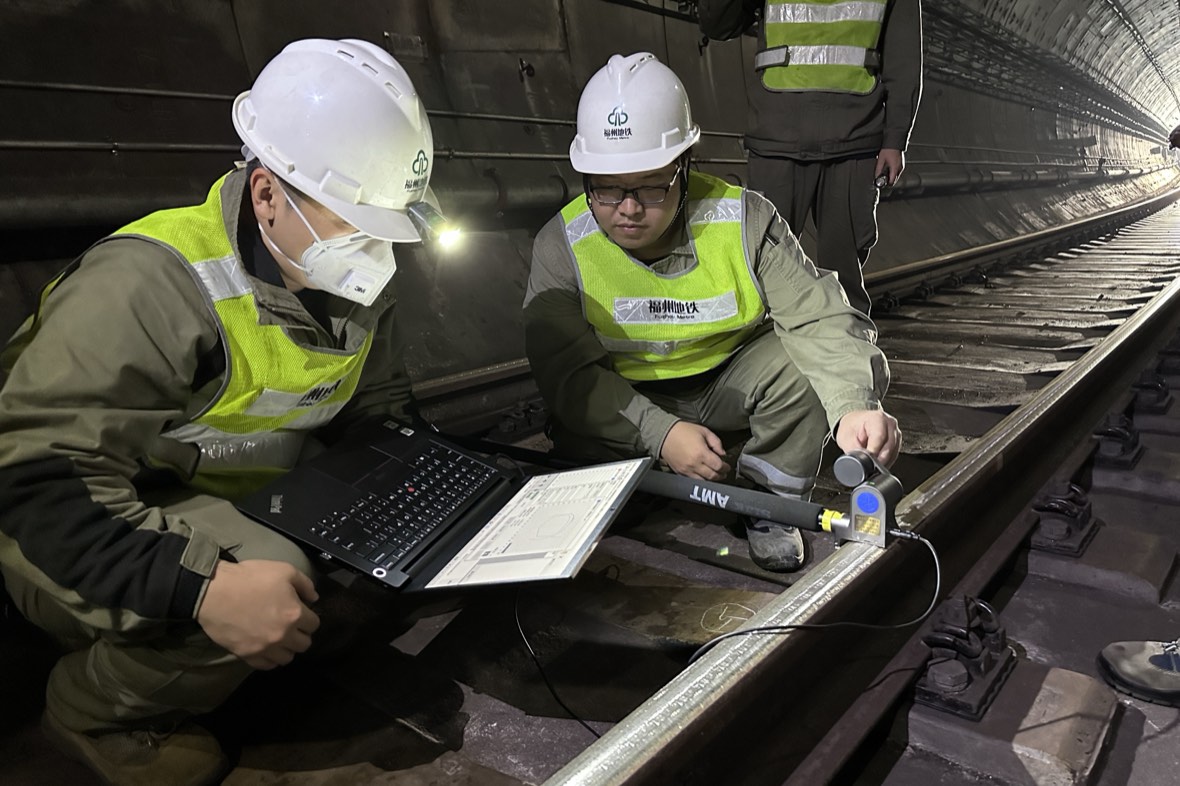
Here is the part of this market that no forecast captures. Before a machine is offered, a buyer writes a specification, and that document determines how many suppliers can respond. In a market with four or five credible global builders and a longer list of regional ones, a specification can reduce the field to one without ever naming a preferred supplier.
When the Specification Names the Model
The most direct version of this is a qualification requirement that lists machine model numbers as a condition of bidding. China Railway procurement documents do exactly that: a tender for track maintenance equipment overhaul services requires a valid locomotive and rolling stock manufacturing or repair licence whose certificate covers product models including DC-32, DCL-32K, CDC-16, WD-320, SPZ-200, DPZ-440, WY-100K and QS-650K.
Read that clause as a supplier and its meaning is unambiguous. Those model designations belong to one Chinese manufacturer's product range. A competitor with an equivalent machine under a different designation cannot qualify, however well the machine performs, because the requirement is about a certificate that names specific models rather than about capability.
This is an extreme case, but the mechanism is universal and appears in milder forms everywhere. A clause requiring ten years of experience with a named network's asset register. A clause requiring a reference from a specific operator. A clause requiring a service depot within a stated distance, which is reasonable in itself and can be written at a radius that only one supplier can meet.
Clauses That Move Risk to the Supplier
The opposite failure is a specification that transfers so much risk that only a supplier with a very strong balance sheet can bid, which again narrows the field, this time by commercial rather than technical means.
A South African ballast regulating contract shows how far this can go. The technical requirements include 1,065 mm gauge, axle load at or below 20 tonnes, capability on 135 m radius curves and 1:30 gradients, a regulating output of at least 1.2 km per hour, and independent emergency brakes giving at least 12.5 per cent retardation. Those are demanding but achievable. The clauses that decide the bidder list are the ones around them: equipment no more than ten years old or refurbished within the last five with documented replacement of critical components, payment calculated per final linear kilometre against the client's profile tolerance, a performance regime with service deductions of 2.5 to 12.5 per cent below thresholds of 95 to 98 per cent achievement, and an NEC3 term service contract with the risk allocation that implies.
Read as a package, that contract does not buy a machine. It buys guaranteed availability, with the availability risk priced into the bid. A supplier who owns a fifteen-year-old machine in good condition is excluded by the age clause; a small supplier is excluded by the deduction regime; a supplier without local support is excluded by the availability threshold. Each clause is defensible on its own. Together they define a supplier.
| Clause type | Written to achieve | Who it excludes | What a buyer gives up |
|---|---|---|---|
| Named model or certificate | Compatibility with an existing fleet | Any supplier with an equivalent under another designation | Price tension, and access to newer designs |
| Fleet age limit | Reliability and lower maintenance risk | Owners of sound older machines, and the refurbishment trade | The cheapest route to capability |
| Reference from a named operator | Proven performance | New entrants with equivalent work elsewhere | Competition from outside the incumbent circle |
| Local depot radius | Response time | Suppliers who would support remotely or by arrangement | Lower support cost |
| Availability guarantee with deductions | Uptime | Suppliers without a balance sheet to carry the risk | A lower headline price |
| Payment per accepted kilometre | Output, not effort | Suppliers who cannot absorb measurement disputes | Simplicity, and sometimes goodwill |
The pattern in that table is that every clause is individually reasonable and collectively decisive. A buyer who wants competition has to audit the specification for cumulative effect, not for any single line. The practical test is to ask, before issuing: how many suppliers could pass every clause at once, and is that number at least three? If the answer is one, the document has already made the decision, and the negotiation that follows is about price within a monopoly.
The Retrofit and Specialised Tool Niche
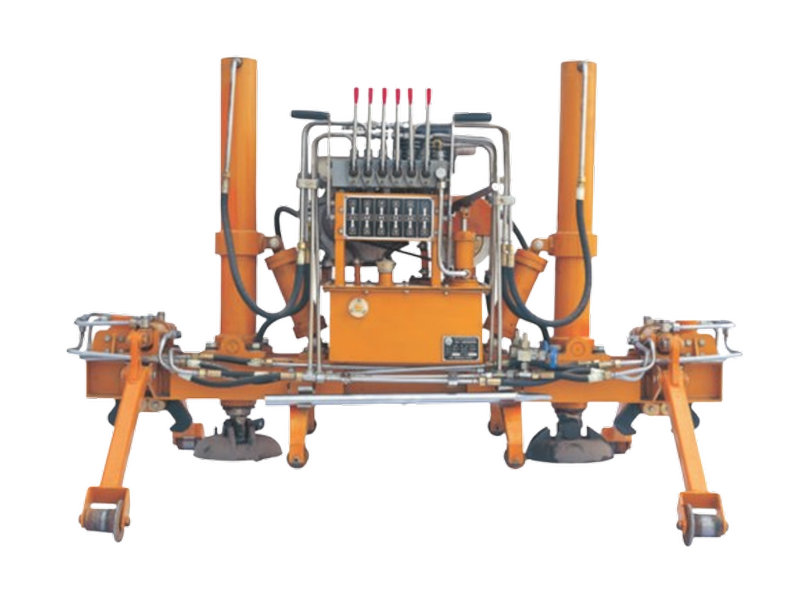
Most of the world cannot buy a production tamper, and the market knows it. The niche that serves everyone else is built on three things: small machines that do one job well, attachments that turn an existing vehicle into a maintenance machine, and tooling that lets a small gang do work that would otherwise need a machine.
The retrofit route is the least discussed and the most commercially accessible. A road-rail excavator with a tamping attachment, a lifting and lining unit mounted on a carrier, a modular grinding unit that fits a existing power pack: none of these is a substitute for a Unimat, and all of them let an operator with a modest budget stop outsourcing the routine work.
| Approach | Typical capability | Where it genuinely works | Where it does not |
|---|---|---|---|
| Attachment on a road-rail carrier | Tamping, lifting, auger work on short sections | Depots, sidings, industrial track, isolated defects | Production tamping, geometry-critical plain line |
| Modular or compact grinder | Turnout and weld finishing, local profile correction | Turnouts, crossings, weld repairs, urban track | Whole-track profile restoration at scale |
| Portable measurement | Gauge, wear, corrugation, geometry on foot | All networks, and the only option in confined track | Continuous measurement at line speed |
| Manual tooling with power assistance | Clipping, drilling, sawing, lifting | Everywhere, and the fallback when nothing else fits | Anything requiring sustained output |
The honest version of this section is that the niche is not a cheaper path to the same outcome. It is a different operating model, in which the operator accepts lower output per hour in exchange for no capital, no approval regime and no dependency on a possession that only the infrastructure manager can grant. For a port railway, a metro depot, an industrial network or a mining spur, that trade is often correct, and the machine market's headline growth rate has nothing to say about it.
For operators building capability this way, the practical sequence is measurement first, then the tools that fix what the measurement found, then grinding once the surface work becomes routine. The railway maintenance tools range is organised along that sequence rather than by machine type, which is the order in which capability is usually acquired.
Where the Chinese Supply Chain Actually Sits
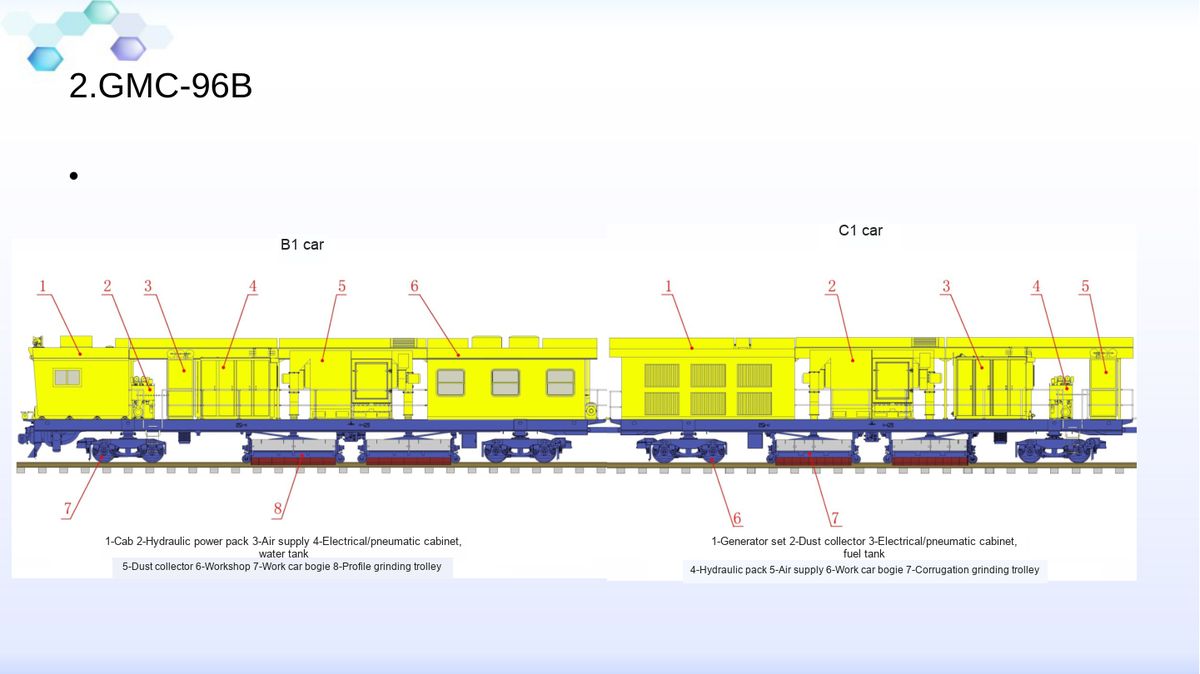
China accounts for a large share of units sold in the machine families where unit count is the relevant measure, and it is one of the two principal production bases for the industry alongside Europe. What that share does not tell you is how much of the global market is open to a Chinese machine, because the barrier is not price and rarely performance.
The barrier is approval. A track machine is a vehicle, and vehicles are approved against network rules. The European framework runs through EN 14033 for track machines and, for interoperable networks, the TSI for locomotives and passenger rolling stock. Meeting those requires a conformity assessment process, a notified body, a technical file and a demonstrated safety case, and the cost of that process is largely independent of the price of the machine. A builder selling a USD 60,000 compact grinder and a builder selling a multi-million dollar tamping train face similar absolute costs to obtain the same approval, which means the burden falls hardest on the cheaper machine.
The second barrier is the parts radius. A machine that needs a control board flown in from another continent is not available, whatever its purchase price. This is why the Chinese supply position is strongest in three places and weakest in a fourth. It is strong in small machines and tooling, where the approval burden is lighter and the buyer often works on private track not subject to network approval. It is strong in components and consumables, which cross borders as parts rather than as vehicles. It is strong in markets where the operator is also the regulator, because there is one approval authority instead of two. It is weakest in interoperable mainline work in Europe, where the approval regime is the product.
That is a more useful map than a market share figure, because it tells a supplier where to compete and a buyer where the price advantage is real. A compact grinder from a Chinese factory can be excellent value and fully fit for a depot. A tamping train from the same supply base will need to clear an approval process that has nothing to do with how well it tamps, and the buyer should plan for the time and cost of that rather than assume the price advantage survives it.
| Market position | Approval burden | Parts radius reality | Where it wins |
|---|---|---|---|
| Small machines and tooling, private track | None, because no network approval applies | Weeks by air freight, acceptable for a machine that is not on the critical path | Depots, sidings, industrial and mining track |
| Components and consumables | None, they are parts rather than vehicles | Local distributor stock decides | Everywhere, and the least contested part of the trade |
| Complete machines for an operator who is also the regulator | One approval authority, and often a national standard written around available products | Months, but the buyer has no alternative either | National networks in markets without an interoperability regime |
| Interoperable mainline machines in Europe | EN 14033 plus, where applicable, TSI compliance and a notified body | Must be days, not months, because the machine is on the critical path | Only where a builder has invested in the approval as a product |
For operators who want the profile side of the work handled without owning a grinding train, the rail grinding solution page sets out how wheels, machines and acceptance criteria are matched, and the railway grinder machine range covers the compact end of that market.
Outlook: Value Grows Faster Than Units
The forecasts agree on direction and disagree on magnitude, which is normal. What matters for anyone planning a purchase or a supply strategy is the shape of the growth rather than its rate.
Value growth outpaces unit growth by roughly half again, 8.2 per cent against 5.5 per cent on the broadest published estimate. That gap is where the industry's margin is being made: measurement, diagnostics, reporting, automation and the software that turns machine output into a maintenance plan.
The installed base is the real market. One manufacturer reports an installed base above 17,800 machines. A fleet that size, with a 25 year service life, generates a rebuild and spares business that is larger and more predictable than new machine sales, and it explains why lifecycle support has moved from an afterthought to a strategy across the sector.
Concentration is moderate and stable. The largest supplier holds a little over 12 per cent and the top five together hold about 41 per cent. That is concentrated enough that the top five set the technical agenda and fragmented enough that a new entrant with a specific capability can find a position, particularly in the small-machine and attachment niche where the approval burden is lighter.
Digital maintenance is the claim to watch, not the claim to buy. UIC and McKinsey analysis is quoted as showing that predictive maintenance for rail infrastructure can cut unplanned downtime by 15 to 25 per cent. That outcome depends on converting inspection and machine data into a work plan, which is a process change, not a sensor purchase. A buyer who installs condition monitoring and changes nothing else should expect no benefit, and suppliers who sell the sensor without the workflow are selling the easy half.
Electrification shifts the machine mix. Three quarters of passenger rail activity is already electric, against 60 per cent in 2000, and that changes what has to be maintained: more catenary and overhead line work, more machines capable of operating in noise and emission constrained corridors, and more work in tunnels where a diesel machine is unwelcome.
| Trend | What it changes about a purchase | What to do about it |
|---|---|---|
| Value growing faster than units | The expensive option buys measurement and reporting, not just output | Ask what record the machine produces, and whether anyone will accept it |
| A large installed base | Rebuilds and spares outnumber new sales | Price the rebuild before you buy, and check it is available |
| Moderate concentration | Five suppliers set the technical agenda | Make sure at least three can bid on your specification |
| Digital maintenance claims | Downtime reduction depends on workflow, not sensors | Buy the workflow or buy nothing |
| Electrification | More catenary work, more emission-constrained corridors | Check the drive architecture against the tunnels and depots you actually have |
None of those five trends is a reason to buy a particular machine. Together they are a reason to buy machines whose output can be measured, whose support is local enough to matter, and whose approval will still be valid in fifteen years. Those three criteria eliminate more candidates than any performance comparison.
Railway Maintenance Machinery Market FAQ
How large is the railway maintenance machinery market?
Published 2025 estimates range from about USD 4.57 billion to USD 6.42 billion, with growth forecasts between 5.5 and 8.2 per cent a year. The low figure counts new machine sales by product type. The high figure includes track laying and renewal systems, overhead line vehicles and a broader definition of the ecosystem around the machine.
Why do the published market sizes disagree?
Mainly over scope. Some estimates count only new machine sales; others include aftermarket parts, refurbishment and service contracts. Some include track laying and renewal trains, which are machinery but not maintenance in the narrow sense. The spread here is 1.4 times, which is small compared with the service side of railway maintenance, where scopes differ far more sharply.
Is it better to buy a railway maintenance machine or contract the work?
It depends on how much of the work you have. A machine is justified when the annual volume is high enough to keep it utilised and when access is under your control. Contracting is better when the need is intermittent, because the capital cost of a machine is fixed while a contract cost scales with use. Grinding is the family where contracting most often wins, which is why grinding trains are frequently owned by service providers rather than by network owners.
What is the most common mistake in a maintenance machine tender?
Writing clauses that are each reasonable and collectively restrictive. A fleet age limit, a reference from a named operator, a local depot radius and an availability guarantee with deductions can each be justified, and together they can reduce the bidders to one. Audit the specification for cumulative effect before issuing it, and check that at least three credible suppliers could pass every clause at once.
Can a machine built outside Europe be used on a European network?
It can, but track machines are vehicles and are approved against network rules. The European reference for track machines is EN 14033, and machines for interoperable networks may need TSI compliance. The cost of that process is largely independent of the machine price, so it weighs most heavily on cheaper machines. For depots and private sidings that are not part of an approved network, the burden is often much lighter.
What decides the resale value of a maintenance machine?
Two things, and neither is visible in the machine itself. The first is whether it can still obtain approval on the networks where it would be used, which depends on the approval regime having not moved too far since it was built. The second is whether its measuring and control electronics can still be supported and still export data in a format clients accept. A mechanically excellent machine that fails either test has scrap value.
Building a Position in This Market
The railway maintenance machinery market is not one market. It is a small number of very expensive machines bought by infrastructure managers, a larger number of mid-size machines bought by contractors and industrial operators, and a very large number of tools and small machines bought by everyone else. The forecasts cover the first two and barely see the third.
That is why the same set of numbers can be read as a mature 5.5 per cent industry or an 8.2 per cent growth story, and why neither reading helps you decide what to buy. What helps is knowing which family you need, which channel can deliver it with support you can reach, and whether the approval and support position will still hold when the machine is fifteen years old.
For the procurement side of that decision, the railway maintenance equipment procurement checklist covers requirement definition, supplier audit and acceptance testing. For the machine landscape within one family, the rail grinding machine manufacturers directory maps the builders and what separates them. And for the service market that surrounds these machines, the rail carriage maintenance and repair services market covers the vehicle side, which is a different business with different constraints.
Where a project needs the machine, the consumable and the crew arranged together rather than bought separately, the rail maintenance solution page sets out how the pieces fit into one maintenance cycle, and project cooperation is the place to start a conversation about a specific line.