Railway Maintenance Training: How to Train Track Teams on Grinding and Rail Care
Grinding is the one track maintenance task where the finished work is invisible from the operator's seat. Nobody can tell, while the machine is running, how much steel has come off the rail head, whether the profile is converging on target, or whether the surface has just been burned. Everything that matters is confirmed afterwards, by measurement. That single fact reshapes how railway maintenance training has to be built. The job is not to transfer information — most crews already know what grinding is for. The job is to narrow the spread between the best and worst result your team can produce on the same rail with the same machine. This guide sets out how to tier that training by the size of the decisions each role makes, what actually has to be taught at each tier, where the knowledge comes from given that no standard contains it, and four measurements that show whether the training worked. Compare grinding with the other recurring jobs on a maintenance gang. A rail change has a joint you can look at. Tamping has a lift and a consolidated sleeper you can walk past and see. A weld has a finished collar with a measurable geometry. All three hand the operator a piece of evidence the moment the work is done. Grinding hands back nothing. Three things the operator needs to know are all hidden while the pass is happening: How much steel left the rail. There is no gauge on the machine that reads removal depth. The operator has a travel speed, a head downforce or motor load, and the visual character of the sparks — all indirect signals that correlate with removal without ever stating it. The number only appears afterwards, from a straightedge and feeler gauge or a profile measuring device. How far the profile still is from target. A grinding pattern is a sequence of head angles, each cutting a band of the rail head. Whether those bands overlapped enough, or left an unground strip between them, cannot be judged from inside the cab. It is found later, on a profile trace. How much heat went into the surface. Burn and blueing are thermal damage. The operator controls the inputs that cause them — depth per pass, feed rate, head pressure, how long the head has been working continuously — but sees the result only when the rail is inspected, by which time the surface is either acceptable or has to be reworked. This is not a criticism of operators. It is a property of the process, and it is precisely why the skill is hard to build and easy to fake. A crew can complete a possession, hand the track back on time, and have produced a result that fails acceptance — and nothing during the shift would have told them so. Any training programme that does not start from this fact tends to teach grinding as a set of procedures to be followed, when the actual skill is calibrating your own judgement against measurements you will only see later. Here is the diagnostic that matters more than any curriculum outline. Take two crews on your network, give them the same machine, the same rail section and the same target profile, and compare what they produce. If one crew's profile lands inside tolerance and the other's does not, you do not have a knowledge problem. Both crews know what grinding is. You have a variance problem, and variance is what training is for. Knowledge problems look different. A crew that does not know burn comes from excess heat will keep producing burn no matter how much you talk about profile tolerance. But once every crew knows what burn is, further lectures add almost nothing. The remaining spread between them comes from judgement: how deep to take the first pass on a rail whose history is uncertain, when to stop adding passes and re-measure instead, how to read a load reading that is drifting. So the target of railway maintenance training is not a knowledge level. It is a narrowed distribution. The right question for a training budget is not "how many people did we train" but "did the spread between our best and worst grinding result get smaller". That question has a measurable answer, which is the subject of a later section, and it is the reason training sits closer to quality assurance than to human resources. There is a second reason variance matters more in grinding than in most track work. Grinding is a destructive operation that is also a corrective one. Tamping done badly can be redone. A rail ground past its allowance cannot be un-ground — the section is gone. When a judgement error costs a permanent slice of the rail, reducing variance is not an efficiency exercise but an asset protection one. Most training ladders are built on seniority: beginner, intermediate, advanced. That ordering tells you about the person's experience, not about what their mistakes cost. A more useful axis for grinding is decision radius — how far the consequences of a single decision reach, and how long it takes for the mistake to surface. The lengths are not arbitrary, and they are not a simple escalation. Five, ten and thirty days is closer to a geometric than an arithmetic progression, and that is appropriate: a tier-3 error can waste a year of expenditure before anyone notices, so the time spent making that judgement reliable is cheap by comparison. Reading the table another way, the training investment per role scales with how long the role has to wait before finding out it was wrong. An operator learns within the same shift. A manager learns at the next annual review, by which point the money is committed. That framing also settles a common budget argument. It is tempting to send everyone on the operator course and call the programme complete, because that is where most of the headcount sits. But the tier-3 decision — which sections get ground, how many times a year, against what target — sets the conditions every operator then works inside. A well-trained crew executing a badly designed programme will hit the wrong target accurately. The first tier is a safety and standardisation course, and it should be judged by one test: can this person be left with the machine on a possession without a supervisor standing next to them. That means the outcome is not familiarity with grinding, it is a repeatable routine with no improvisation in it. The content that gets a new operator to that point is narrower than people expect, and almost all of it is procedural: What is deliberately absent from tier 1 is process optimisation. A new operator who starts adjusting patterns to chase a better profile before they can run a standard one reliably is a liability, because they are improvising inside a process whose results they cannot yet see. Tier 2 is the real step change, and it is where most in-house programmes are thinnest. The transition is from "can execute the procedure" to "can explain why the result came out the way it did, and change the inputs accordingly". That requires the physics, not more procedure. Four subject areas carry that transition, and each maps to a failure mode an experienced operator will already have met without being able to name: Metal removal kinetics and thermal management. How depth of cut, feed rate and pressure interact to set both removal rate and heat input, and why the two cannot be optimised independently. The practical output is an operator who can predict that a particular combination will burn before it does — the mechanism behind blueing, and the reason a burnt surface is a new defect rather than a cosmetic flaw, is set out in our guide to rail burning prevention. Profile design theory and wheel-rail contact. Why the target profile is what it is, how contact band width follows from it, and what happens to contact stress when the band narrows. This is the knowledge that stops a crew treating the target profile as an arbitrary drawing. The engineering background is in rail profile grinding techniques and standards. Defect formation mechanisms and targeted process design. Why corrugation, squats, shelling and side wear each need a different pattern and depth, rather than one heavier pass. An operator who can identify the defect mechanism from the surface can choose a process; one who cannot will default to more passes. The mechanisms are covered in rolling contact fatigue origins and mitigation. Data reading and fault diagnosis. Interpreting the machine's own performance data as a trend rather than an instantaneous number, working a fault tree instead of guessing, and using inspection instruments properly. This is where tier 2 stops being about the machine and starts being about evidence — and where knowing the difference between machine classes, as set out in how to choose a rail grinder, starts to matter to the person operating one. The distinction between tier 1 and tier 2 shows up clearly under pressure. Faced with a profile that will not come in after the planned number of passes, a tier-1 operator adds passes. A tier-2 operator stops, re-measures, and works out whether the problem is depth allocation, an angle that is not covering its band, or a defect deeper than the plan assumed. Only one of those two responses protects the rail. The third tier is rarely thought of as training at all, which is why it is usually missing. It addresses the people who decide how often a section is ground, what the annual budget is, and whose target profile is adopted. Their decisions are made in meetings, not on track, and their mistakes take a year to become visible. Three capabilities belong at this tier: Whole-life asset management. Grinding strategy built on reliability-centred maintenance thinking: what failure modes the rail actually has, which of them grinding can defer, and how the grinding interval interacts with the replacement horizon. The point is to stop treating grinding as an annual line item and start treating it as a lever on rail life. Cost modelling across the asset life. The full cost of a grinding programme is not the per-kilometre rate. It is passes multiplied by speed, divided by the window available, plus wheel consumption, plus rework, plus the value of the section spent. Getting this wrong in either direction is expensive: a programme sized on the cheapest rate per kilometre often costs more in total, for the reasons set out in rail grinding cost per kilometre. A section-level budget model also needs an honest answer to which mileage gets ground first, and that question has its own logic. Performance measurement and KPI design. What to measure so that the programme can be judged, and what not to measure. This is the tier where a badly chosen KPI does the most damage: a contract that pays on kilometres ground will reliably produce kilometres ground, whether or not the rail needed them. The reason this tier matters disproportionately is that its output is the specification everyone else works to. The interval, the target profile, the acceptance criteria and the payment basis are all set here. A tier-3 group that cannot model the cost of a deeper corrective cut will keep choosing the corrective programme, because its cost lands in a different budget line from the consequence. Ask where the knowledge in a grinding course comes from and the honest answer is uncomfortable: very little of it is written down in a standard. Understanding what the standards do and do not cover is itself part of the training, because it tells a crew when they are inside a rule and when they are relying on judgement. The bench-test row is the clearest illustration. A grinding performance test is a tightly specified piece of engineering. The Chinese railway standard for rail grinding wheels, Q/CR 1-2014, fixes its bench test to a 45 steel workpiece of 1,585 mm diameter and 10 mm thickness at 150–180 HB, run at 10.8 km/h for a line grinding wheel and 5.4 km/h for a turnout wheel, with the test stopped on cracking, abnormal noise, pressure above 10,000 N, or instantaneous power exceeding the set value by 50 per cent. That precision exists because removal rate and burn resistance are real, measurable quantities — they can be pinned down on a test stand. But no standard will tell a crew that this particular section of corrugated rail, at this traffic level, needs a four-angle pattern at a particular depth allocation. That determination depends on the rail, the traffic, the wheel in use and the defects present, and it changes. So the knowledge that separates a good grinding crew from an average one is not standard knowledge at all. It is pattern knowledge, and it can only come from two places: measurements taken on real track, and someone who has already made the mistakes explaining what they saw. This has a direct consequence for how training is sourced. A programme built entirely from standards documents will be accurate and nearly useless. A programme built entirely from a supplier's sales material will be usable and unreliable. The useful middle is a programme that teaches the standards as the boundary, and then teaches the pattern from operating data — which is why every hands-on tier in this guide is anchored to real track rather than to a classroom. There is a specific gap that shows up in almost every grinding team, and it sits exactly on the boundary between the operator and the buyer: the crew does not know what wheel is on the machine, beyond its part number. That gap is expensive because the wheel sets how many passes the job takes. In controlled test work comparing wheel formulations on the same rail, the number of passes needed to clear the defect differed by roughly a factor of two — general-purpose wheels took four to six passes, while a harder composite wheel cleared the same defect in two to three. Same rail, same machine, same target; half the passes, and therefore roughly half the metal removed and half the time in the possession. An operator who does not know which of those two situations they are in has only one lever: add passes until the result looks right. That is how a rail gets ground twice as deep as it needed to be, by someone following the procedure correctly. Conversely, a crew that understands the difference between wear resistance and cutting ability — and knows that a harder wheel that does not cut is a false economy — can tell when a substitution has changed the job. So wheel literacy belongs inside the training, at tier 2, as process knowledge rather than procurement knowledge. It needs to cover how a wheel's grade moves the balance between life and cutting, why the rated speed marked on the wheel is a limit and not a target, and why two wheels of the same dimensions can produce different results. This is where a grinding wheel supplier and a training provider are the same conversation, and it is the reason Molaton quotes a grade against a stated duty rather than as a standalone number — the duty is what makes the grade meaningful, and the duty is exactly what a trained crew can describe. The obvious objection to any training plan is that it costs track time. It does not have to, provided the theory and the practice are separated and only the practice touches the railway. Two delivery formats carry almost all of it: Workshop training at a fixed facility. Small-group instruction on real machines, held at a training centre or at a site the client nominates. The value here is that the machine can be opened up — structure demonstrated, console worked through in full, faults injected and cleared, safety scenarios run — none of which is possible on a live possession. Class sizes stay small because the content is hands-on; beyond roughly fifteen people, the practice time per trainee collapses. Practical training on the client's own track. The trainer arrives with the equipment and the training happens during scheduled work, on the client's actual rail, at the client's actual defect mix. This is where pattern knowledge transfers, because the crew is working on the geometry they will actually face. It also costs no additional possession: it is the existing work, run with an instructor present and a debrief after each shift. The combination matters because each format fails on its own. Workshop-only training produces people who can operate a machine in a clean environment and have never seen a corrugated curve. Site-only training produces people who have learned one site's habits and have never had a fault explained to them with the machine open. Run together, the workshop establishes the mechanism and the site establishes the judgement. Two supporting items do more work than their cost suggests. First, a written standard operating procedure the crew can actually carry — laminated cards and a quick-reference chart survive a possession better than a folder. Second, a maintenance calendar and a component atlas: knowing which parts fail and when is a large part of tier-1 fault recognition, and it is normally transmitted by word of mouth until someone writes it down. Our own grinding training programme is built on this split, with modular units that can be recombined around safety and compliance, basic operation, advanced application, fault diagnosis, or maintenance and servicing. A training programme with no measurement attached will be judged on how the course felt. Four indicators connect it to the asset instead. Grinding quality index spread. Some administrations now score the finished profile against the design profile as an index, judged region by region across the rail head and then aggregated. One Chinese intercity operator's own standard, for example, splits the rail head into four regions with asymmetric tolerances at the crown and ±0.2 mm elsewhere, scores each profile from 0 to 100, and sets acceptance at 85 or above for excellent and 70 for acceptable — then adds a separate requirement on the standard deviation across a section, of 8 or less for excellent and 10 for acceptable. That deviation limit is the part that matters for training, because it is a direct measure of consistency. If the index spread across your sections narrows after training, the training worked; if the average improves but the spread does not, you have fixed a few crews and left the variation in place. Wheel consumption per unit of work. Expressed as running kilometres per millimetre of wheel wear, this is the most honest proxy for whether a crew is cutting efficiently or grinding by brute force. A crew that has learned to set depth and pattern correctly needs fewer passes for the same removal, and the wheel figure moves. The measurement method and the factors that move it are covered in rail wear measurement and when to grind or replace. Rework rate. How often a section has to be re-entered because the first pass did not come in. Rework is the clearest financial signal of a variance problem, and it usually disappears fast once pattern knowledge is in place. Unplanned stoppages attributable to grinding. Burn that has to be removed, a wheel failure that was actually a mounting error, a machine stopped for a fault that a tier-2 diagnosis would have identified. Tracking these against crews rather than against the fleet shows where the training has not landed. None of the four requires new instrumentation. All of them require the programme to record what it already measures in a comparable way over time, which is the same discipline good acceptance reporting depends on — the grinding acceptance standards that a contract should be written against and a training programme should be judged by. The practical way to design a programme is to start from the grinding plan and work backwards, rather than starting from a syllabus. Four steps do it. Write down what the plan asks of people. Take the actual annual plan — which sections, what intervals, what target profile, what acceptance — and list the decisions it requires. Not the tasks: the decisions. "Decide whether this section needs a second pass" is a decision. "Operate the grinder" is a task. Attribute each decision to a tier. Use the decision radius test. If getting it wrong is discovered within the same possession, it belongs to tier 1. If it surfaces at the next measurement, tier 2. If it surfaces at the next budget review, tier 3. Check who currently owns decisions nobody was trained for. This is where most programmes find their gap, and it is usually at tier 3 — the interval and the target profile being set by whoever has the spreadsheet, rather than by someone trained to model the consequences. A crew can be fully certified and still be held to a programme designed without any of the knowledge the certification covered. Attach a measurement to each tier before the first course runs. Decide in advance how you will know each tier worked, using the four indicators above. Fixing the measure first stops the programme from drifting into whatever is easiest to teach. Two further points on sequencing. Train tier 3 before tier 1 if the programme itself is being rewritten, because the target and the interval define what the operators are being trained to achieve. And expect the second cohort to be more productive than the first: the first group's questions are what turn a generic syllabus into a curriculum matched to your railway, and that asset is worth deliberately capturing rather than re-deriving each year. It depends on the tier rather than on the person. A safety and standardisation course for new operators runs about five days, mostly practical. A technical specialist course covering process physics, diagnostics and data interpretation runs about ten days, weighted towards practice. A programme-level course for managers and technical directors runs about thirty days, split between theory and strategic planning work. Attempting to compress tier 2 into a tier-1 duration is the most common mistake, because the subject matter is not more of the same — it is a different kind of knowledge. Yes, if theory and practice are separated. Workshop training at a fixed facility uses no track time at all and is actually better for anything requiring the machine to be opened up or a fault to be injected. Practical training is then delivered during scheduled work, on the client's own rail, with an instructor present — it consumes the possession the crew already had rather than an additional one. The only element that genuinely needs protected time is the hands-on practice on live equipment, which is why that part stays inside existing windows. It is less about team size than about decision coverage. A very small network can cover tier 1 internally and buy in tiers 2 and 3, because tiers 2 and 3 need the accumulated operating data and defect variety that a small network does not generate on its own. A larger network should still buy in tier 3 initially — the cost modelling and KPI design work benefits from having seen more than one network's programme. What does not work at any size is training everyone to tier 1 and leaving tier 2 uncovered. For the process portion of tier 2, yes. The wheel is a variable inside the process, not a separate purchasing decision: a change in grade moves the number of passes needed to clear a defect, and a crew that cannot recognise that will compensate by grinding deeper. Supplier involvement is most useful when it is specific — explaining how grade trades wear life against cutting ability, what the marked speed limit means, and why two wheels of identical dimensions can behave differently — rather than general product familiarisation. By measuring the spread, not the average. Score the finished profile against the design profile and track the standard deviation across sections before and after training. If the deviation narrows, consistency improved. Support that with wheel consumption per running kilometre, rework rate, and unplanned stoppages traced back to grinding. A programme where the average quality rises but the spread does not has fixed a few good crews and left the underlying variance untouched. No, and conflating them wastes money. Certification confirms someone has met a defined competence standard — it is a gate. Training is what makes the competence real, and the tier structure exists because the competence required at each decision radius is different. A certificate that says an operator completed a course tells you nothing about whether their sections pass acceptance with a narrow spread. That is why the four measurements matter more than the certificate, and why certification without a measurement programme tends to produce confidence without consistency. Railway maintenance training in grinding succeeds or fails on one thing: whether it narrows the distance between your best crew's result and your worst. Everything else — the syllabus, the course length, the certificate — is scaffolding around that. The structure that gets there is not complicated. Establish the safety and standardisation floor for everyone who touches the machine. Teach the physics and the diagnostics to the people who set parameters, because that is where the judgement lives. Bring the people who set the interval and the budget into a room, because their decisions determine whether a well-trained crew is aimed at the right target. Accept that most of the craft knowledge is not written in any standard and therefore has to be transferred from operating data and from people who have already made the mistakes. And measure the spread before and after, so the next year's programme is built on evidence rather than on how the course felt. If you are rewriting a grinding programme or staffing a new team, we can map the tiers against your actual plan and tell you which decisions are currently uncovered. Start from your rail condition and traffic — see how the programme level fits into our rail grinding solution, look at the machines and wheels a trained crew will actually run, or talk to us about a training plan built around the defects your teams are seeing now.Why Rail Grinding Is the Hardest Skill on a Track Team to Teach
What Railway Maintenance Training Has to Fix: Variance, Not Knowledge
Sizing the Programme by Decision Radius, Not Job Title
Tier Role What they decide Time scale of the decision Cost of one wrong call Typical length 1 New operator, safety officer, team leader How this pass is run — angle sequence, speed, pressure, when to stop Minutes, within one possession A section has to be re-ground; extra metal spent 5 days (1 theory + 4 practice) 2 Experienced operator, maintenance engineer, site supervisor How the parameters are set for this rail, and what an abnormal reading means Hours to days, across a work order A whole possession is wasted, or a defect is misdiagnosed 10 days (3 theory + 7 practice) 3 Project manager, maintenance manager, technical director How often this track is ground, on what budget, to whose target Months to years, across the asset life A year of budget spent on the wrong mileage, or a programme that never catches up 30 days (10 theory and seminar + 20 strategic planning) Tier 1: What a New Operator Must Be Able to Do Unattended
Tier 2: From Running the Machine to Diagnosing the Result
Tier 3: Training the People Who Set the Grinding Programme
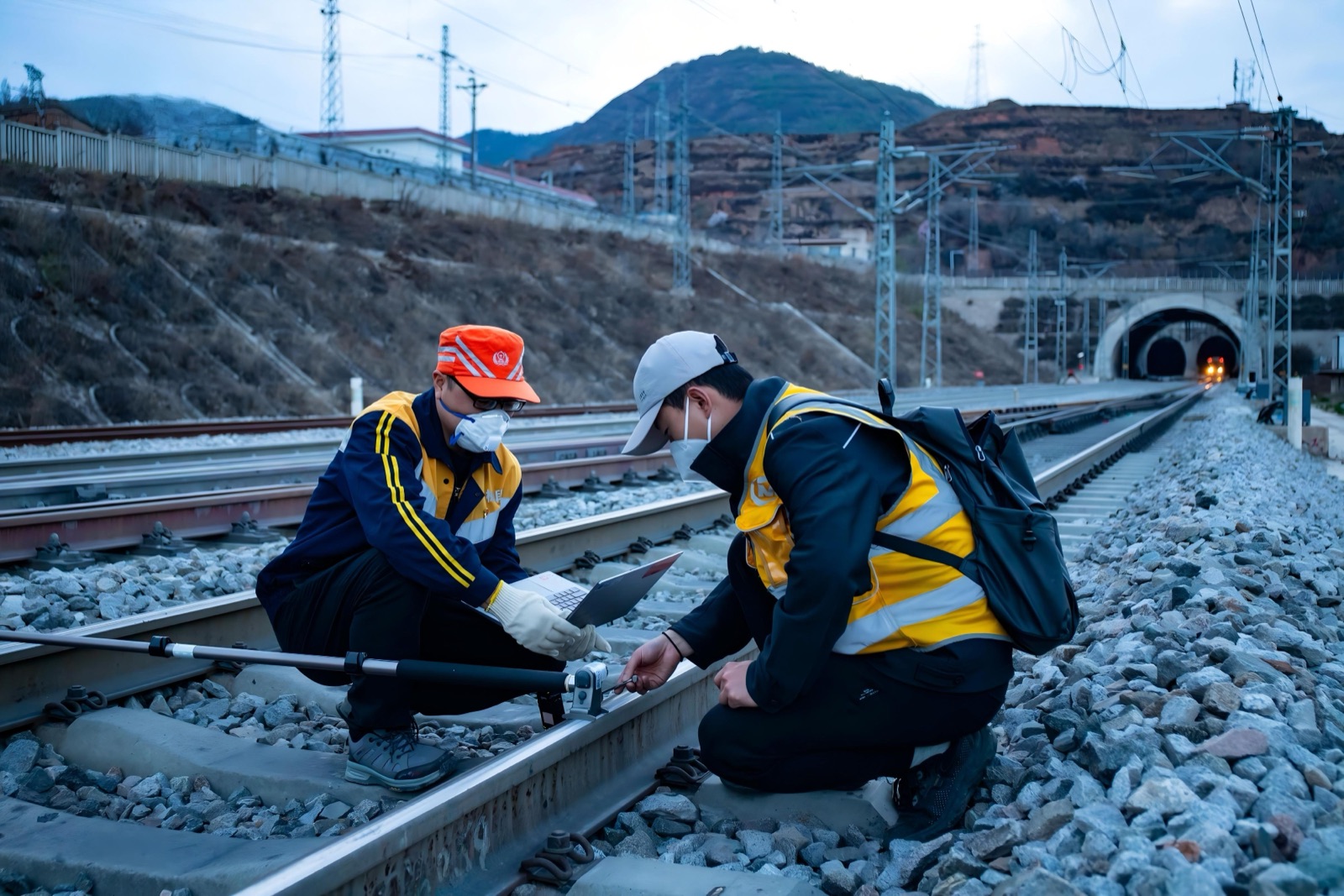
Why Most of the Craft Knowledge Is Not in Any Standard
What standards do cover What they leave to judgement Wheel product requirements: dimensions, tolerances, balance, rotation strength Which wheel grade suits this rail's hardness and this duty Marking and rated surface speed, and the test regime behind them What depth per pass that speed can actually support on this track Acceptance of the finished surface — roughness, flatness against a straightedge, no continuous blueing, maximum depth into the parent metal How many passes, at what angles, to reach that acceptance on this particular defect Bench test conditions for grinding performance, including workpiece material, hardness and the wheel and turnout test speeds Anything about the real pattern: angle sequence, band overlap, speed through a curve Inspection methods for the wheel itself, and permanent marking requirements How to read a profile trace and decide the next action The Wheel Is Part of the Curriculum, Not a Purchasing Detail
How to Deliver Railway Maintenance Training Without Extra Possessions
Proving It Worked: Four Measurable Outcomes
Building the Curriculum Backwards From Your Grinding Plan
Frequently Asked Questions
How long does railway maintenance training take?
Can grinding training be done without taking extra track possessions?
What is the minimum team size that makes in-house training worthwhile?
Should the grinding wheel supplier be involved in the training?
How do you know whether the training actually improved anything?
Is grinding training the same as operator certification?
Train the Judgement, Then Measure It