How does heavy-haul tonnage change grinding strategy?
How does heavy-haul tonnage change grinding strategy?
Tonnage does not change the rules of grinding; it changes the clock. Every tonne puts the same wheel over the same steel, so wear, plastic deformation and rolling contact fatigue all accumulate at once, and the plan that was maintenance at 20 MGT a year is a debt at 100 MGT. What moves is not the method but four settings: how often, how deep, which profile, and how the track is divided.
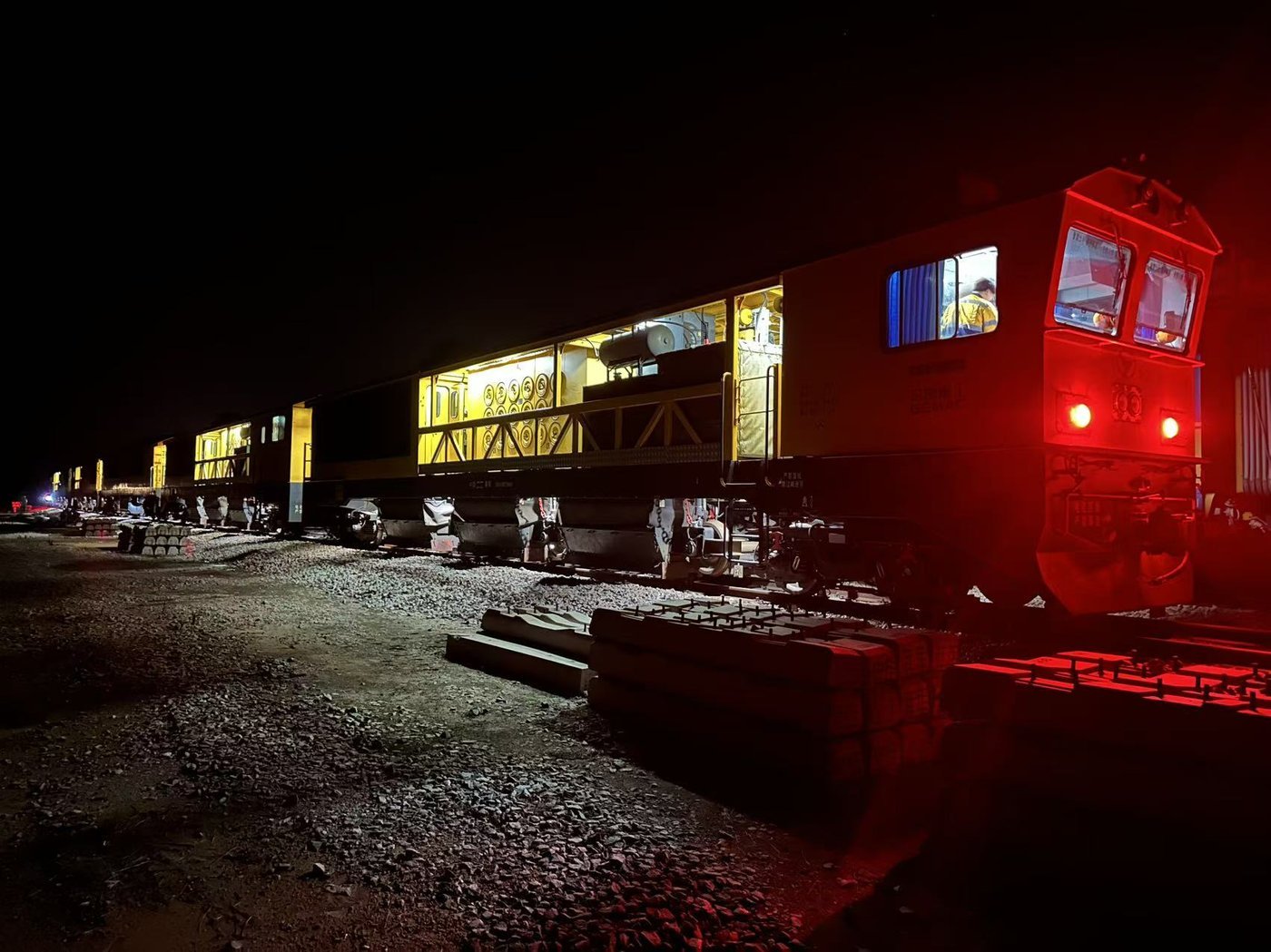
Three mechanisms running on one clock
| Mechanism | What it does to a heavy-haul rail head | What it forces into the plan |
|---|---|---|
| Abrasive wear | Metal leaves the gauge face and the crown steadily; the head narrows and flattens | The interval is written in tonnes, not in months |
| Plastic deformation | High contact stress from heavy axle loads pushes metal sideways, so the crown cups and a lip builds at the gauge corner or field side | Preventive depth has to clear the deformed layer, not polish its surface |
| Rolling contact fatigue | Crack layers form where the wheel keeps loading the same band | The interval also has a ceiling: grinding must arrive before cracks pass the depth it can still reach |
The defect mix says the same thing more bluntly. On Chinese heavy-haul track the dominant family is deformation — shelling and flange build-up — whereas high-speed lines are dominated by contact fatigue and metro curves by side wear and corrugation. A heavy-haul grinding plan is therefore mostly a deformation control plan, and its success is measured by how little deformation reaches the next campaign.
The steel is built for that duty. 75N-U78CrV raises carbon to 0.75-0.82%, silicon to 0.70-0.80%, manganese to 0.80-1.10% and adds 0.30-0.50% chromium, while holding sulphur and phosphorus at or below 0.02%: a metallurgy chosen for wear resistance and load capacity. It is also why heavy-haul rail is the hardest grinding duty there is — the same pass removes less metal from this head than from a softer one.
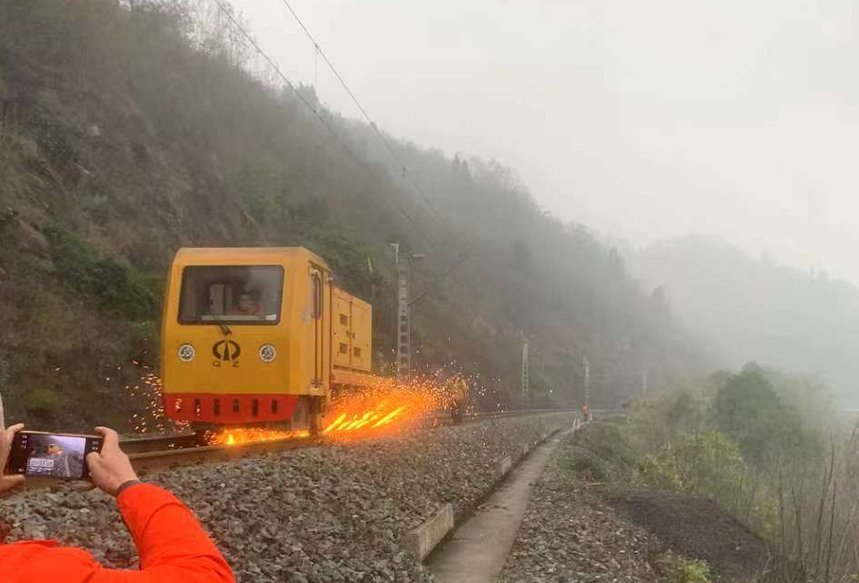
Four settings that move with the tonnage
| Setting | Light-traffic default | Heavy-haul setting | Where the figure comes from |
|---|---|---|---|
| Interval | About 100 Mt per pass on straight track and large-radius curves | 30-50 Mt, and shorter again where curves and gradients concentrate the damage | Chinese permanent way requirements; what transfers between networks is the curve-to-tangent ratio, not the absolute number |
| Depth per pass | Preventive work at 0.1 mm or more | Preventive depth set to remove the deformed layer, corrective work at 0.2 mm or more, always inside the 0.5 mm acceptance ceiling | Mode of work plus a finite profile envelope; the ceiling is a ceiling, never a target |
| Profile target | 60N on 60 kg/m main line | 75N where 75 kg/m rail is laid; 60N stays on the 60 kg/m sections | Q/CR 583-2017 profile guidance; the Shuohuang corridor carries both, 75N uphill and 60 downhill |
| Acceptance band | Contact band 25-30 mm at high-speed turnouts | 35-40 mm on conventional and heavy-haul | Turnout grinding practice, split by traffic rather than by preference |
Converting millimetres into tonnes is where plans quietly break. Our own grinding project records include a heavy-haul line where the rail head was consuming roughly 0.2 mm of section per 25 MGT. That single in-service figure does most of the work, because it answers two questions at once: how many campaigns the rail has left inside its envelope, and how much of that envelope this year's plan is about to spend. It is a measurement, not a standard — a line with different grades, gradients and curve content will produce a different number, and adopting ours without measuring yours is how intervals end up set by optimism.
The same discipline applies to position rather than to the average. On a 68 km heavy-haul line in Shandong carrying about 40 million tonnes a year, six passes at 12 km/h through an R=800 m curve removed up to 0.3 mm on the high-rail field side and up to 1.8 mm on the low-rail side. One pass plan, six times the metal in one place. Any heavy-haul depth figure quoted as a single number is therefore a planning average, and the acceptance measurement has to be positional.
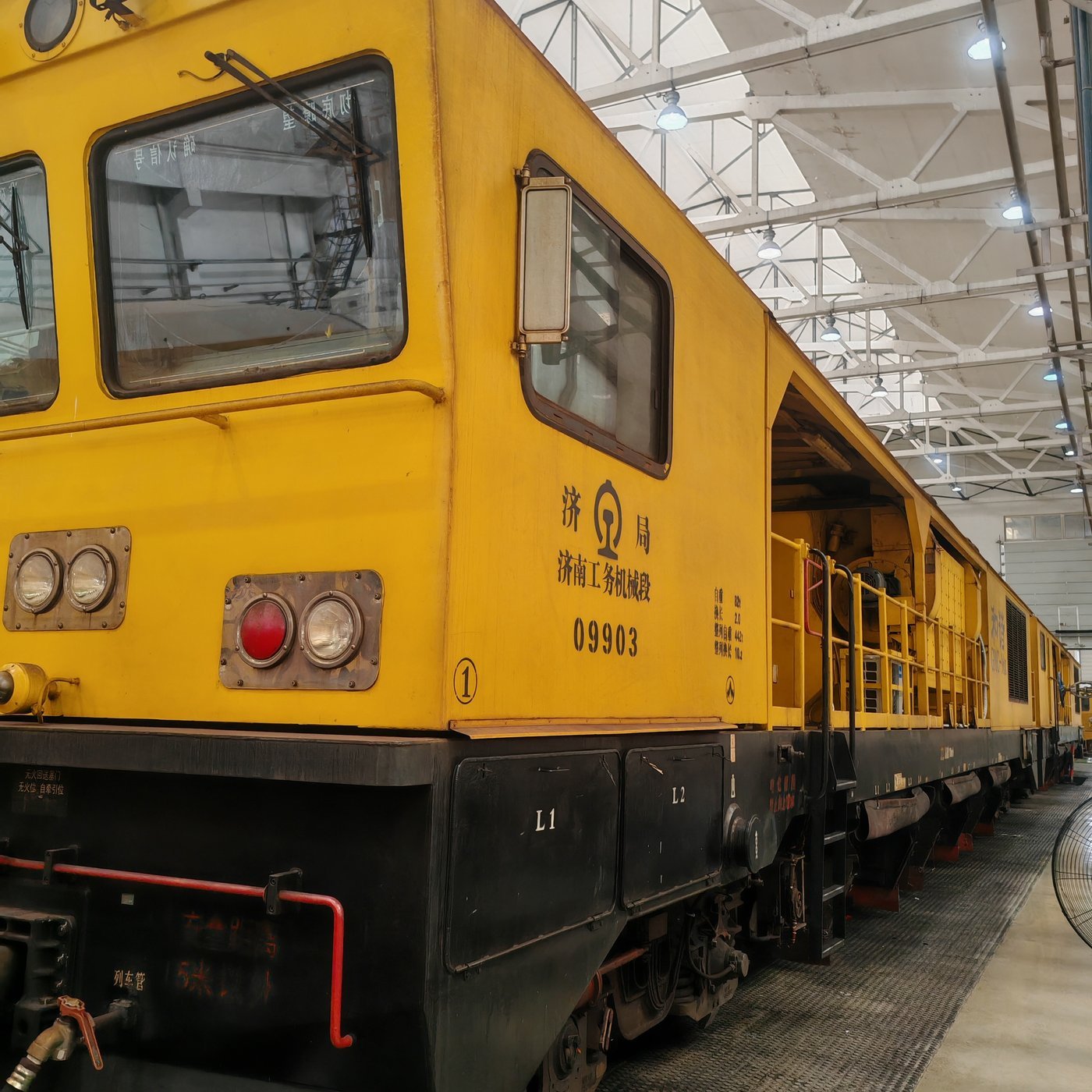
When the tonnage outruns the plan
| Constraint you hit | How the numbers expose it | What you must not do about it |
|---|---|---|
| Windows cannot carry the workload the tonnage creates | Required pass-kilometres divided by output per window exceeds the nights available; one machine produced 18.72 pass-kilometres inside a single 2-hour night window on the Hengliu line | Do not cut depth to fit the window — a shallow campaign spends envelope without removing the deformation |
| Corrective work becomes the majority of campaigns | Envelope consumed per year climbs while the profile keeps degrading | Do not answer with deeper corrective passes; the answer is shorter intervals or a different split of the track |
| The same defects return inside one interval | The deformed layer was thicker than the depth actually applied | Do not add passes without adding depth — repeating a shallow cut polishes the layer it failed to remove |
| Curve and tangent are planned as one block | Gauge-face wear stops being the governing defect, so the tangent interval no longer fits | Do not apply a tangent interval to a curve; separate the two plans and separate their acceptance points |
The economics follow the same arithmetic, and it is worth stating as structure rather than as price. Wheel consumption scales with pass-kilometres, occupation time is a fixed cost per night whatever that night produces, and rail replacement is the terminal cost both of them exist to postpone. A heavy-haul strategy that shortens intervals deliberately spends more of the first two in order to protect the third — that trade is the whole argument, and it is worth making in numbers rather than in adjectives.
There is a product consequence too, and it is the reason RailwayCare publishes heavy-haul consumption separately from high-speed results: a wheel that holds a 35-40 mm contact band on 75N rail while removing a deformation layer pass after pass is being asked for something different from a wheel polishing a high-speed head. Molaton heavy-haul wheels are qualified on exactly that duty, and our heavy-haul line case record reports the consumption and profile results from it. The strategy sets the interval; the Molaton wheel is what has to survive inside it.
Related questions you may also ask
Rail grinding for heavy-haul and mining railways How is a rail grinding interval set by tonnage? How many grinding passes does a rail need? How does rail steel hardness affect the wheel choice? More answers on rail grinding strategy and equipmentRunning tonnage your plan cannot keep up with?
Send RailwayCare your annual gross tonnage, rail grades, curve list and window length. We will turn them into campaign intervals, positional depths and a Molaton wheel schedule that fits the nights you actually get.
Plan the Campaign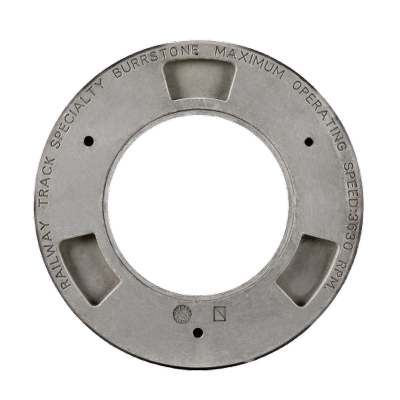

Are you looking for a reliable manufacturer of railway grinding and track maintenance equipment?
We can quickly provide customers with market analysis, technical support and customized services.
Safe Tracks Proven by China
- Name
- Phone
- *Title
- *Content