Home / All / Railway Inspection Tools / Track Geometry Measurement Tools / RCI GNSS Track Geometry Inspection Trolley
RCI GNSS Track Geometry Inspection Trolley



Detail Information
Overview
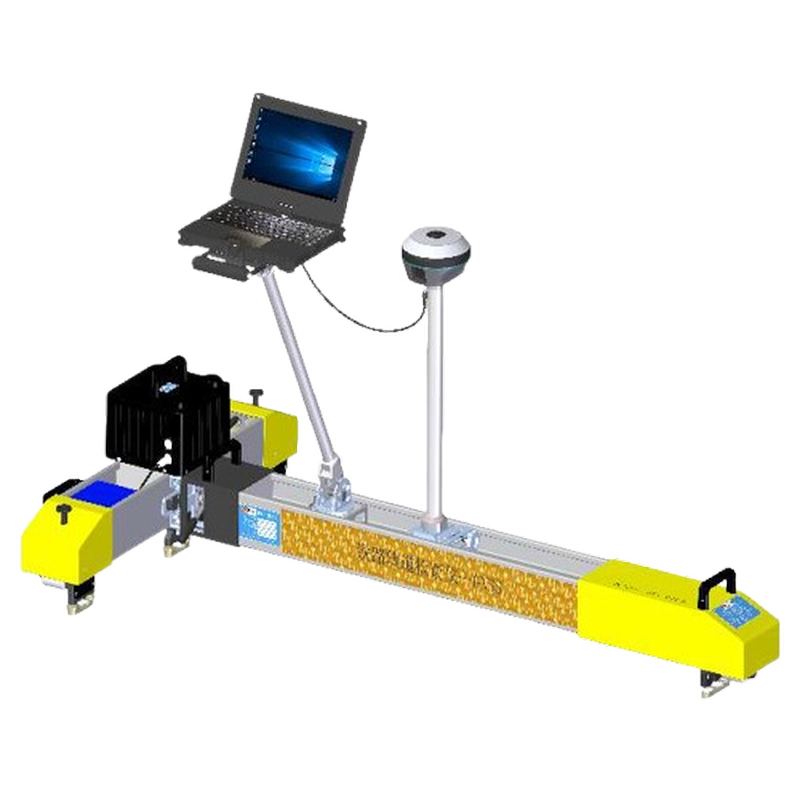
The RCI GNSS integrates dual-frequency GNSS receivers (L1/L2) with an IMU to provide absolute position referencing while retaining relative measurement precision. In known network RTK mode, lateral and vertical deviations are constrained to ±20.00 mm and ±30.00 mm respectively—sufficient for line-level geometry validation. The system maintains ±0.30 mm gauge and superelevation accuracy across all speeds from 4 to 5 km/h. It automatically logs track coordinates, generates static TQI reports, and exports adjustment proposals compatible with tamper control systems. Designed for daytime, open-sky operations on mainlines and yard tracks.
Key Components
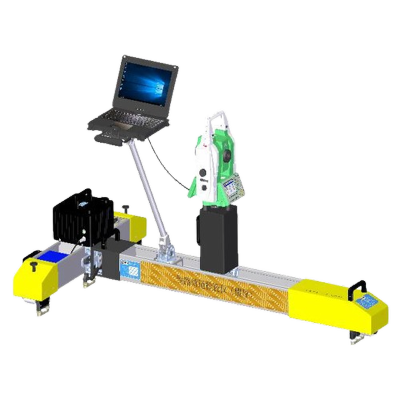
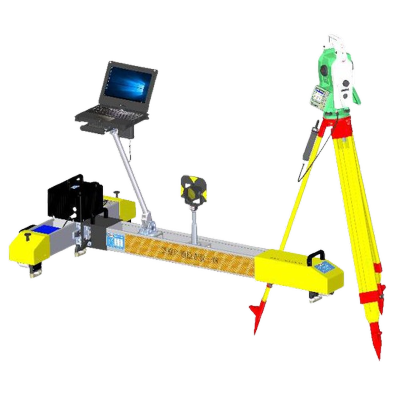
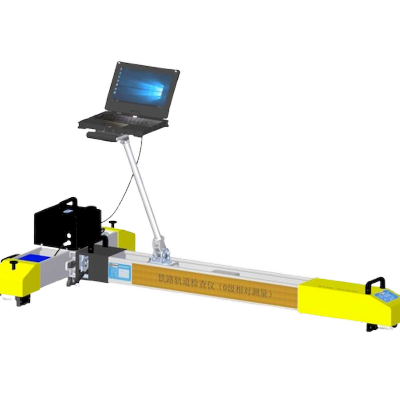
The GNSS‑based railway track inspection system comprises the following components:
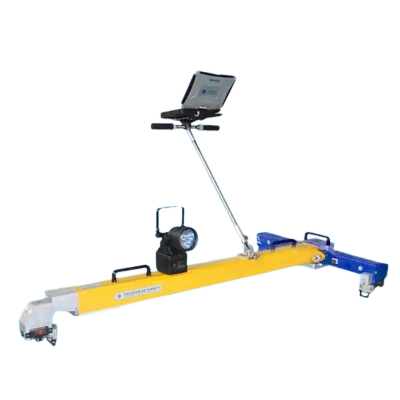
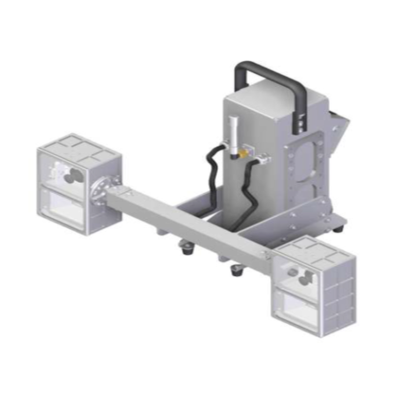
● T‑shaped trolley – mobile platform for the inspection system
● Inertial Measurement System (IMS) – provides core inertial measurements
● Inertial Measurement System (IMS) – provides core inertial measurements
● Sleeper identification and positioning system – identifies sleeper positions and aids in localization
● Ruggedized military‑grade laptop computer – runs the data acquisition and analysis software
● Data acquisition and analysis software – handles real‑time and post‑processing of inspection data
● Global Navigation Satellite System (GNSS) receiver – enables satellite‑based positioning
● Dedicated ballasted track adjustment software – supports adjustment workflows for ballasted tracks
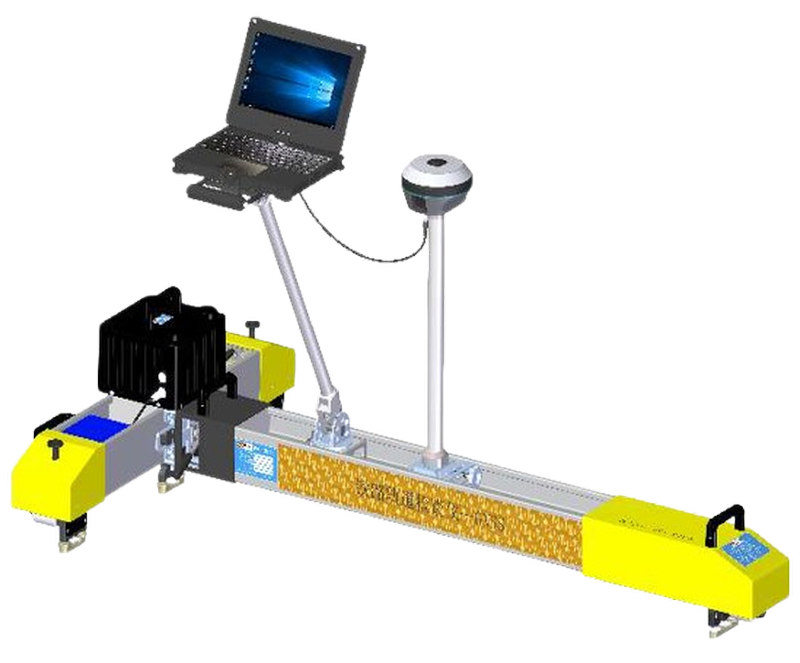
RCI Series Track Geometry Inspection Trolley – Technical Specifications
Type | RCI INS(Inertial)Track Inspection Trolley | RCI GNSSTrack Inspection Trolley | RCI TWTrack Inspection Trolley | RCI GJY-TW-RB-1 (Class 0 Relative)Track Inspection Trolley | RCI GJY-T-4A (Class 1 Relative)Track Inspection Trolley | |||||||||||||||
Main Parameter | Gauge | ±0.30 mm | ±0.30 mm | ±0.30 mm | ±0.30 mm | ±0.50 mm | ||||||||||||||
Superelevation | ±0.30 mm | ±0.30 mm | ±0.30 mm | ±0.30 mm | ±0.50 mm | |||||||||||||||
Twist | ±0.50 mm | ±0.50 mm | ±0.50 mm | ±0.50 mm | ±0.70 mm | |||||||||||||||
Alignment & Profile | ±0.70 mm | ±0.70 mm | ±0.70 mm | ±0.70 mm | ±0.10 mm | |||||||||||||||
Versine | ±1.00 mm | ±0.10 mm | ±0.10 mm | ±0.10 mm | ±0.10 mm | |||||||||||||||
Alignment & Profile (30m) | ±0.70 mm | ±0.70 mm | ±0.70 mm | ±0.70 mm | — | |||||||||||||||
Alignment & Profile (300m) | ±3.00 mm | ±3.00 mm | ±3.00 mm | ±3.00 mm | — | |||||||||||||||
Lateral Deviation | ±3.00 mm | — | ±3.00 mm | — | — | |||||||||||||||
Vertical Deviation | ±2.50 mm | — | ±2.50 mm | — | — | |||||||||||||||
Mileage | ±0.10% | ±0.10% | ±0.10% | ±0.10% | ±0.10% | |||||||||||||||
Measurement Efficiency | 1.5–3 km/h | 4–5 km/h | 1–2 km/h | 4–6 km/h | 4–6 km/h | |||||||||||||||
Application Scopes
⚪ Reconstruction of track alignment based on:
The relative displacement data of the existing track geometry,
The smoothness (riding quality) of the existing reference line.
⚪ Guidance for precise and digital tamping operations by large maintenance machinery on lines with unspecified track quality conditions (e.g., BSG, SERUM, RMS).
Technical Specifications
● GNSS: GPS + GLONASS + BeiDou, RTK capable
● Battery: Hot-swappable 24V Li-ion (6 h)
● Weight: ≤30 kg
● Dimensions: 0.68 × 0.34 × 0.92 m
● IP Rating: IP54
● Temp Range: –20 °C to +50 °C
Frequently Asked Questions
What is this product used for?
The RCI GNSS track geometry trolley uses RTK GNSS fused with inertial measurement to deliver plus or minus 0.30 mm gauge accuracy at 4 to 5 km/h in known-network mode.
What are the key specifications?
Key specifications: Weight ≤ 50kg; Product Type GNSS-Augmented Rail Track Inspection Trolley; Measurement Principle RTK GNSS + inertial fusion (known network mode).
What does GNSS add to a trolley survey?
RTK fixes absolute position in known-network mode, so a run ties straight into the network without laying extra track markers.
Can the survey data be exported into our asset system?
Yes. Reports export as PDF plus CSV or Excel for TQI, geometry and defect records, so results drop straight into your maintenance database.
Related Products and Solutions
Review
- 加载中···
Please send your message to us
- Name
- Phone
- *Title
- *Content

Safe Tracks Proven by China
Please send your message to us
- Name
- Phone
- *Title
- *Content