Train track sharpener vs rail grinder: what is the difference?
Train track sharpener vs rail grinder: what is the difference?
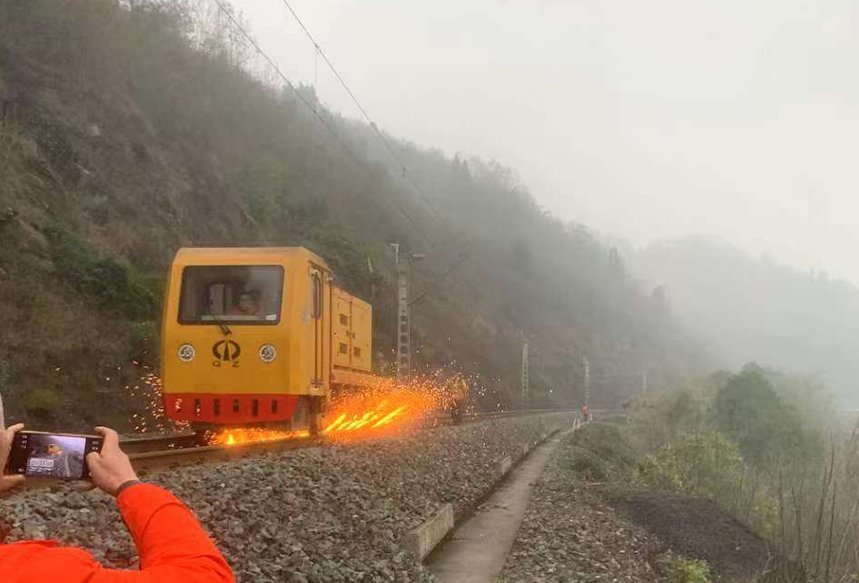
There is no tool called a train track sharpener. A rail is not a blade, so nothing on a railway is sharpened — it is ground. The correct name for the machine is a rail grinder (also called a track grinder or rail grinding machine), and the consumable that does the cutting is a rail grinding wheel, not a whetstone. "Train track sharpener" is simply a layman's word for both, and it is worth correcting before you buy, because the specification you need depends on which of the two you actually mean.
Correcting the term
| Word people search | What it actually is |
|---|---|
| Train track sharpener / track sharpener | Not a product class. A colloquial name for a rail grinder, or for the grinding wheel it turns |
| Rail grinder / track grinder / rail grinding machine | The machine — hand-guided, vertical-axis, CNC copying, or a multi-head grinding train |
| Rail grinding wheel / rail grinding stone / grinding stone | The abrasive consumable. This is the part bought repeatedly, and the part that decides surface finish |
| Rail milling train | A different technology — cutters, not abrasives. Removes 3–5 mm at the gauge corner in one pass, but works at 0.36–1.20 km/h |
| Rail saw / rail cutter | Cuts rail to length. An unrelated job, though the same family of abrasives is involved |
Why the process is grinding, not sharpening
A railhead is a rolling contact surface, not a cutting edge. What it needs is the right profile and a smooth surface, so the job is to shear off a controlled layer of steel — typically 0.2–0.3 mm per pass — along the wheel/rail contact band. An abrasive wheel does this by thousands of tiny cutting actions; a milling cutter does it with a solid edge. Nothing about it resembles sharpening a knife, which is why experienced buyers search for "rail grinding machine" and never for "rail sharpener".
Work is judged against measurable acceptance criteria rather than by eye: roughness Ra ≤ 10 μm, surface flatness within 0.3 mm under a 1 m straightedge and feeler gauge, no blue burning or oxide layer, a ramp of better than 1‰ at the end of the pass, and no more than 0.5 mm removed from the parent metal.
What to specify instead
First pick the machine class by the size of the job, then the wheel by the machine's spindle. Machine types and their ready-to-buy wheel sizes are listed on the railway grinder product page.
| Job | Machine class | Typical Molaton wheel |
|---|---|---|
| Main-line preventive work, kilometre scale | Grinding train, many heads in one group | 260×90×154 mm, zirconia alumina F16, 50 m/s, 3,630 rpm |
| Switches, turnouts, station tracks | Compact grinder sized to work between the stock rail and the switch blade | 150×70×M20 class, rated 6,000–7,500 rpm |
| Spot defects, welds, short possessions | Portable / hand-guided machine | 150×77×M20 or 150×80×5/8", 6,000 rpm |
| Profile restoration by stored contour | CNC copying grinder | RCG-C65 class — wheel specified from the nameplate |
Two numbers are non-negotiable on any of these. Balance grade: batch balance to G1 ≤ 30 g or G3 ≤ 34 g to GB/T 2492, which is what stops chatter and burning. Speed rating: 50 m/s minimum for train-mounted work, proven by a safety-speed test at 4,775 rpm for 30 s and a burst test at 6,354 rpm without rupture.
Case and data
RailwayCare has made rail grinding wheels since 2004 — the first dedicated manufacturer of rail grinding wheels in China — and drafted the industry standard JB/T 11431 that governs the product today. On a Loram DM01 grinding car trial at Jiangmen Huidafeng in 2026, Molaton stones ran on grinding heads 1/3/5/7 against the incumbent product on heads 2/4/6/8 at 80% power and 7 km/h: no blue burning on any pass, finished railhead roughness Ra 1.05–9.0 μm against the 10 μm limit and mostly in the 2–4 μm band, consuming 0.079–0.151 mm per 100 m·pass. Independent testing at the China Academy of Railway Sciences recorded wheel wear 1.4–2.6× better than the order specification, and on the Liuzhou network a Molaton-wheeled GMC-96X unit completed 18.72 pass-kilometres in a 2-hour possession window. Annual capacity is now 500,000 wheels. Whatever search term brought you here, the buying decision is the same one: which wheel, which bore, which speed rating, which balance grade.
Related questions you may also ask
What is the difference between a rail grinding wheel and a grinding stone? What is a train track grinder used for? Portable rail grinder vs full-size grinding train: which do I need?Not sure which of the two you need?
Send a photo of your machine's nameplate, or of the part number stamped on the wheel you use today. We will confirm the exact Molaton wheel — or the right machine for the job — within 24 hours.
Send Us Your Part Number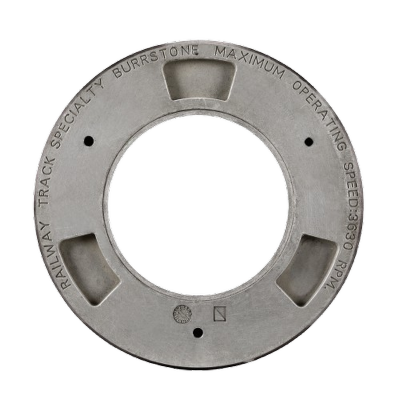
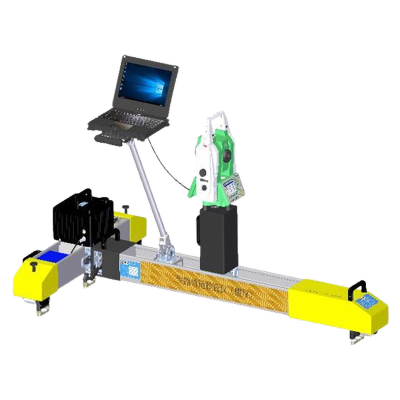
Are you looking for a reliable manufacturer of railway grinding and track maintenance equipment?
We can quickly provide customers with market analysis, technical support and customized services.
Safe Tracks Proven by China
- Name
- Phone
- *Title
- *Content