Rail Squat; Formation Mechanism; White Etching Layer (WEL); Graded Grinding; Prevention and Control
Rail squat is a high-risk surface defect in railway systems. Its essence is the irreversible microstructural transformation of the rail surface metal caused by severe sliding between the wheel and rail. If not addressed promptly, it can rapidly develop into spalling or even a broken rail, posing a serious threat to operational safety. This article, based on a professional review, systematically elaborates its formation mechanisms, identification features, and standardized mitigation procedures.
Formation Mechanisms: Two Core Pathways
Rail squat arises primarily from two physical mechanisms:
● Thermal Phase Transformation Mechanism: During locomotive start-up or emergency braking, intense friction between the wheel and rail generates instantaneous high temperatures, heating the rail surface metal to its austenitization temperature. Rapid cooling in air then forms a brittle martensitic White Etching Layer (WEL) with a hardness of 700–1200 HV. This hard and brittle layer is prone to cracking and spalling under wheel loads, serving as the primary cause for rapid squat propagation.
● Plastic Shear Deformation Mechanism: During traction and braking, cyclically accumulated shear stress causes plastic deformation on the rail surface. When the residual strain exceeds the ultimate ductility of the pearlitic rail, microcracks initiate and propagate, forming squats. The hardness around such squats increases but does not reach the martensitic level.
Regardless of the mechanism, the presence of a White Etching Layer (WEL) is a key metallurgical feature for identifying rail squats.
Classification and Typical Features
Based on their origin, squats are classified into two distinct types:
● Starting Squat: Caused by wheel idling during the start-up of locomotives or EMUs. It appears as paired elliptical depressions on the top surfaces of both left and right rails, often exceeding 0.5 mm in depth, with spacing matching the vehicle's wheelbase.
● Braking Squat: Caused by wheel sliding during train braking. It manifests as continuous strip-like scratches or localized surface spalling on the rail tread, with the damaged layer being the high-hardness martensitic WEL.
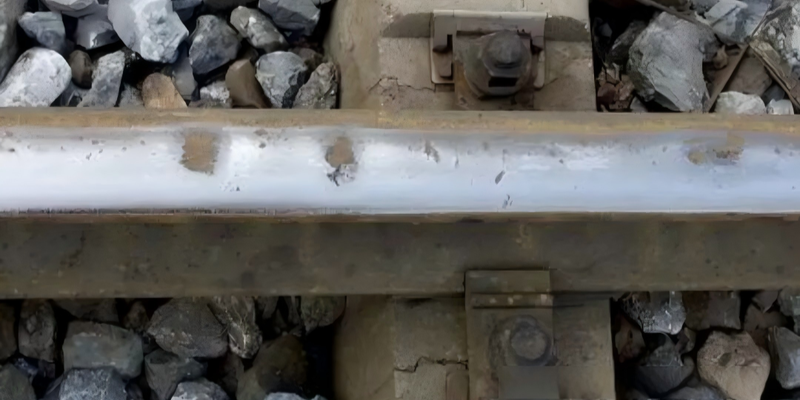
Typical Appearance of Starting Squat
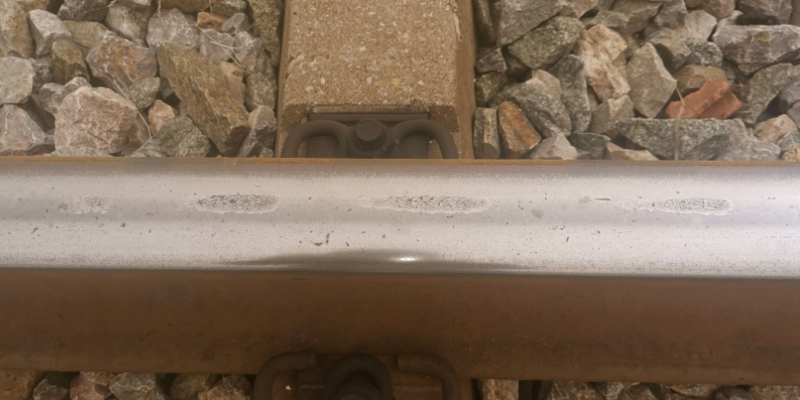
Typical Appearance of Braking Squat
Three-Stage Evolution and Hazards
Squats evolve through three distinct stages from initiation to failure:
● 1. Initial Stage: A dark depression appears on the rail surface; microcracks are invisible to the naked eye.
● 2. Development Stage: Cracks propagate inward at an angle of 20°–25°, forming primary and secondary cracks in opposite directions.
● 3. Formation Stage: A visible V-shaped crack appears on the rail surface, showing a double-lobe shape, with cracks propagating towards the rail web. The rail must be replaced immediately if the depth exceeds 10 mm.
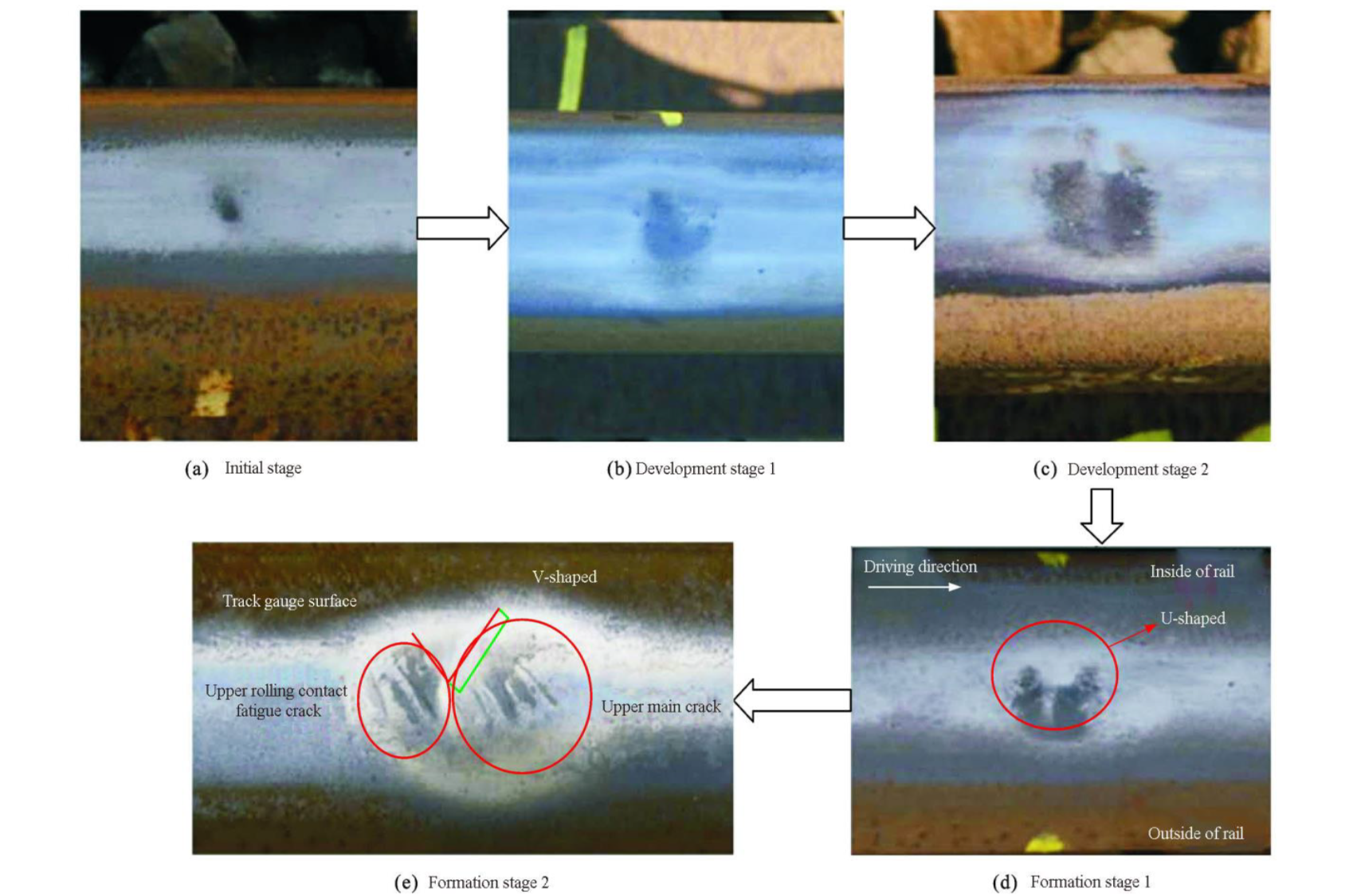
Characteristics of different stages of rail squat
Its hazards lie in its evolution into a stress concentration zone, accelerating rolling contact fatigue, inducing transverse cracks that can directly cause rail breakage, and significantly increasing the full-life maintenance costs.
Precise Rail Inspection and Rail Grading Standards
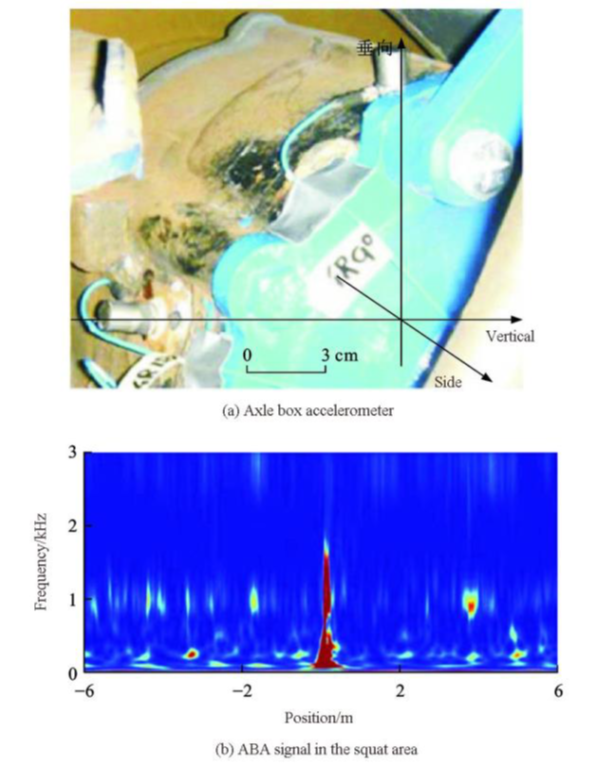
Principle of ABA
Field Detection Methods
● Hardness Judgment: Portable hardness tester >550HB confirms squat (martensitic WEL feature).
● Depth Measurement: Measure depth with depth gauge (actual depth > measured value).
● Profile Measurement: Detect profile change with rail profile gauge.
● Standard Flaw Detection: Combined use of 1m straightedge, ultrasonic and magnetic particle inspection.
● Efficient Inspection: Axle Box Acceleration (ABA) performs well for moderate and severe squats; eddy current inspection is more sensitive to early squats and WEL.
Damage Grading Standards
According to standards like TB/T 3276, damage is graded by line type
● Light Damage: High-speed lines (>120 km/h): 0.5–1.0 mm; Conventional lines: 1–2 mm. Mark, monitor, and recheck regularly.
● Heavy Damage: High-speed lines: ≥1 mm; Conventional lines: ≥2 mm. Replace or repair within 24 hours. Light damage in tunnels/bridges is treated as heavy damage.
Standardized Grinding and Prevention Strategies
Mitigation follows strict graded grinding specifications:
● <0.5mm: Uniform grinding; manual profiling combined with large machinery.
● 0.5–1mm: Simultaneous grinding/milling on both left and right rails.
● ≥1mm: Replace the rail immediately or perform synchronous milling.
Post-grinding acceptance criteria include: hardness difference ≤50 HB, profile depth difference ≤1 mm, and single-side grinding length ≥5000 times the grinding depth.
Fundamental prevention lies in source control: Optimize train traction/braking strategies to reduce wheel idling and sliding; increase flaw detection frequency on high-risk sections like small-radius curves and long steep gradients; and implement preventive grinding to suppress WEL formation.
This closed-loop management system of "precise identification, scientific grading, standardized treatment, and source prevention" effectively controls rail squat risks and ensures safe and efficient railway operations.
Ready to take control of rail squats on your network?
RailwayCare offers end-to-end solutions for rail squat management, from advanced detection and precise grading to standardized grinding protocols and proactive prevention strategies. Our expertise ensures your tracks remain safe, reliable, and cost-effective.
Contact us today for your customized rail squat mitigation plan.
Learn More: www.railwaycare.com
Email: simon.wang@railwaycare.com
📱 WhatsApp: +86 15072332788