Professional Solutions for the Three Major Challenges in Rail Grinding
Professional Solutions for the Three Major Challenges in Rail Grinding
How RailwayCare Delivers ±0.2mm Precision Within the 4-Hour Midnight Maintenance Window
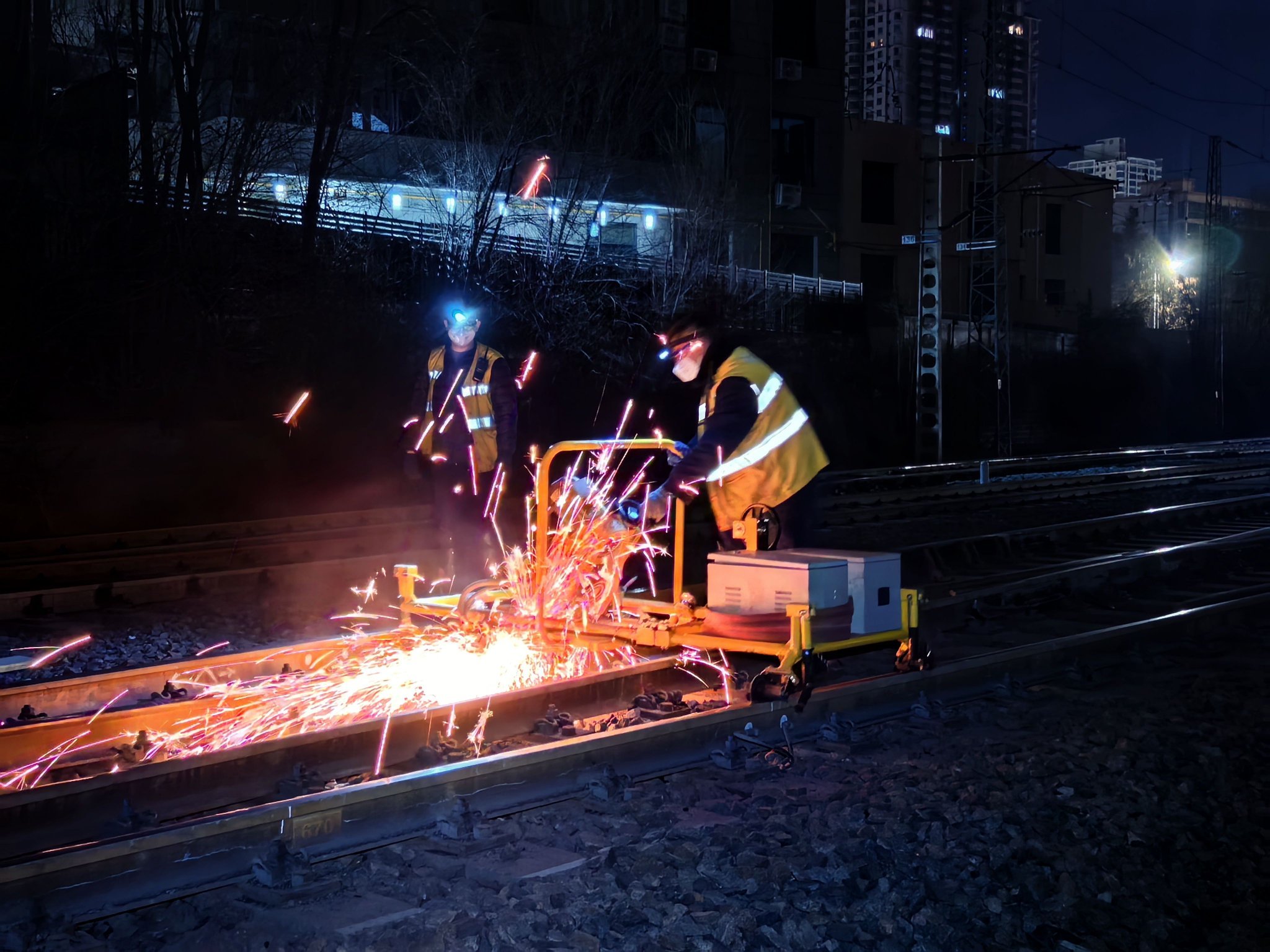
In rail infrastructure, the “maintenance window” isn’t just a schedule—it’s a high-stakes operational window. Between 1:00 AM and 5:00 AM, with no trains running, maintenance teams must inspect, repair, and perfect kilometers of track. Among the most demanding tasks? Rail grinding—where success is measured in ±0.2 millimeters, roughly the thickness of two sheets of A4 paper.
Yet three persistent challenges stand in the way: achieving sub-millimeter precision, delivering results within extreme time constraints, and adapting to highly complex operating conditions. RailwayCare doesn’t treat these as isolated issues—we solve them as an integrated system.
Three Major Challenges in Rail Grinding

Achieving Sub-Millimeter Precision
How do you maintain ±0.2mm profile accuracy across straight sections, gentle curves, and sharp bends—night after night?
Even minor deviations in rail geometry can amplify into ride discomfort, increased noise, or accelerated wear at high speeds. Traditional grinding often applies uniform parameters, ignoring localized wear patterns.

Maximizing Efficiency in a 4-Hour Window
How do you complete setup, grinding, verification, and cleanup—all before sunrise?
Time lost during deployment or re-planning directly reduces the length of track that can be treated. In many operations, non-productive activities consume nearly half the window.

Adapting to Diverse Operating Environments
How do you handle mountainous curves, coastal corrosion, urban tight radii, and heavy-haul deformation—with one system?
Rail wear is never uniform. A solution that works on a straight plain section may fail on a coastal curve under heavy axle loads.
Professional Solutions for Three Major Challenges in Rail Grinding
RailwayCare’s Three-Level Precision Control System ensures consistency without compromise:
1.High-Precision Detection First
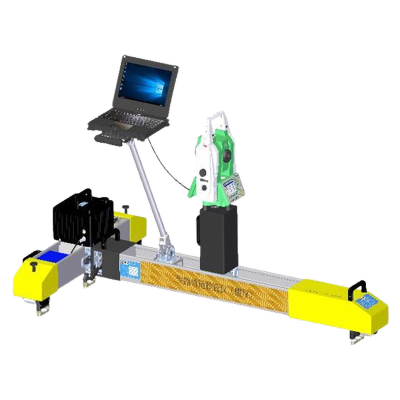
Laser-based profiling captures rail geometry at 0.1mm resolution—before grinding begins.
2.Wear-Based Grinding Plan Formulation
Engineers analyze measured wear modes (e.g., side wear, corrugation, head checking) and apply standardized, zone-specific removal strategies validated through years of operation.
3.Closed-Loop Execution with Real-Time Feedback
Servo-controlled grinding heads adjust automatically based on live sensor input, ensuring actual output matches the plan—typically within ±0.15mm.
Result: Smoother wheel-rail contact, up to 50% longer rail life, and reduced energy consumption.
RailwayCare’s workflow optimization cuts waste and multiplies output:
1.Pre-Operation Planning Based on Historical Data
Grinding parameters are finalized days in advance using past inspection records and known wear trends on the line.
2.Parallel Task Execution
Inspection, grinding, and quality verification run concurrently across segments—no idle time.
3.Modular, Rapid-Deployment Equipment
Interchangeable grinding modules adapt instantly to different line types (high-speed, metro, heavy-haul), slashing setup time by over 40%.
Outcome: Up to 30% more track treated per window—without sacrificing precision.
RailwayCare delivers adaptive intelligence through personalized response protocols grounded in operational experience:
1.Condition-Based Classification
Rails are categorized into standardized wear typologies, each linked to a proven treatment playbook developed from global projects.
2.Real-Time Diagnosis & Adjustment
Onboard sensors detect anomalies during operation, triggering automatic parameter updates based on pre-defined response rules.
3.Global Expert Support Network
If unexpected conditions arise, our engineering team provides live remote assistance via AR-enabled collaboration—ensuring continuity.
🚆 Real-World Validation: The Shuohuang Heavy-Haul Railway Project
Mission: Complete precision grinding of 30 km of heavy-haul track within three consecutive midnight windows, achieving ±0.2mm profile accuracy—including multiple large-radius curves.
Challenge: Severe uneven wear on curves rendered traditional “one-size-fits-all” grinding ineffective: straight sections were over-polished, while curves remained damaged.
RailwayCare’s Integrated Response:
● Zoned Differentiation Strategy
The line was segmented into three zones—straight, gentle curves, and sharp curves—each with custom grinding angles, speeds, and pass counts based on measured wear profiles.
● Dynamic Night-to-Night Optimization
Data from Night 1 informed real-time refinements for Nights 2 and 3, improving consistency and reducing rework.
● Targeted Intervention for Critical Curves
For the three worst-worn segments, we deployed an enhanced mode:
“Precision Pre-Inspection + Low-Speed Grinding + Real-Time Monitoring”
—ensuring controlled material removal without thermal damage or surface distortion.

"This was the most professional and efficient grinding operation we've experienced on Shuohuang Railway."
— Feedback from Shuohuang Railway Maintenance Department
Precision, Efficiency, Complexity: Solved as One System
These three challenges are not separate—they’re interconnected variables in a single operational equation. Sacrificing precision for speed undermines asset life. Ignoring environmental complexity compromises both.
RailwayCare’s value lies in delivering an end-to-end ecosystem—not just equipment, but a unified workflow that spans:
● High-accuracy detection → Experience-based planning → Precision execution → Quality verification → Operator enablement
We don’t just grind rails.
We engineer reliability into every millimeter.
When the maintenance window opens at midnight, RailwayCare ensures that by sunrise, every meter of track is ready—not just to carry trains, but to carry them safely, smoothly, and sustainably.
Ready to Transform Your Maintenance Window?
Discover how RailwayCare’s integrated rail grinding solutions help operators worldwide conquer precision, efficiency, and complexity—all within a 4-hour window.