Molaton vs Norton Railway Grinder Wheel for Loram | Better Value, Same Quality
Rail maintenance is a mission-critical operation where every component must perform at its peak. For operators running Loram rail grinding trains, the railway grinder wheel is not just a consumable — it is the single most important factor determining grinding efficiency, rail surface quality, and total cost of ownership. When a grinder wheel fails prematurely, the ripple effects extend far beyond the grinding head: unplanned downtime, reduced metal removal rates, and uneven rail profiles that accelerate fatigue damage.
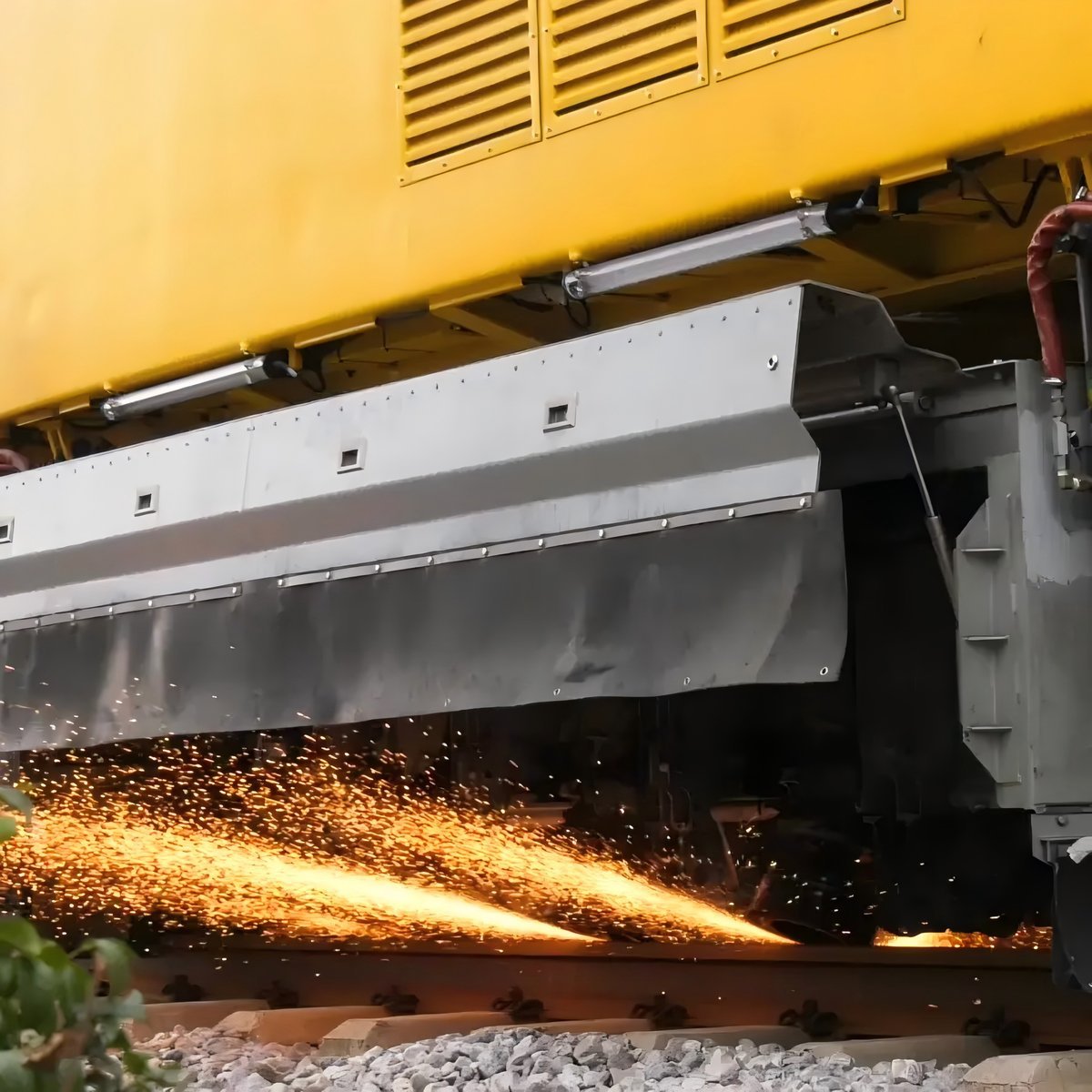
Loram grinding vehicles are engineered to operate at high speeds across main lines, switches, and tight-radius curves. Each grinding head carries multiple railway grinder wheels that must maintain consistent cutting geometry through thousands of miles of track. The challenge is twofold: the abrasive must remove material aggressively enough to correct rail defects, yet wear slowly enough to minimize changeout frequency.
Inconsistent wheel quality creates a cascade of problems. When one wheel wears faster than its neighbors, the grinding head becomes unbalanced, leading to uneven metal removal and poor surface finish. Worse, a wheel that fractures or loses its cutting edge mid-operation can damage the rail head itself — turning a maintenance operation into a repair emergency. For Loram operators, this is not hypothetical. A single failed wheel on a high-production grinding train can cost hours of track time and thousands of dollars in lost productivity.
The most expensive grinder wheel is not the one with the highest price tag. It is the one that fails before its scheduled changeout, forcing an unplanned stop and cascading delays across the maintenance window.
Many procurement teams evaluate grinder wheels on unit price alone. This is a costly mistake. A railway grinder wheel that costs 15% less but wears 30% faster does not save money — it increases total cost per mile, drives up inventory carrying costs, and forces more frequent maintenance stops. The hidden costs extend into labor, logistics, and operational planning.
Consider the full lifecycle: cheaper wheels often use cold-pressed bonding, which produces lower density and weaker abrasive retention. Under the high contact forces of a Loram grinding head, these wheels degrade faster, shed abrasive particles prematurely, and require operators to reduce feed rates to compensate. The result is longer grinding cycles, more fuel consumption, and reduced daily track coverage. When the full cost is calculated — not just the wheel price, but the labor, downtime, and lost production — the "cheap" option becomes the most expensive.
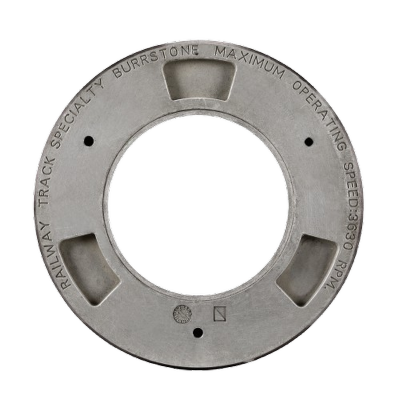
Molaton has engineered a railway grinder wheel specifically for high-intensity rail grinding operations. The foundation is a hot-pressed zirconia alumina abrasive — a material that combines the hardness of fused alumina with the toughness of zirconia. Unlike conventional cold-pressed wheels, Molaton's hot-press process subjects the abrasive matrix to high temperature and pressure during curing, producing a denser, more uniform bond structure.
This manufacturing difference is not subtle. In hot-pressed wheels, the resin bond penetrates more deeply into the abrasive grains, creating stronger mechanical adhesion. The controlled porosity allows swarf and coolant to flow through the wheel face, preventing glazing and maintaining cutting efficiency across the full diameter wear cycle. The result is a railway grinder wheel that stays sharp longer, cuts more consistently, and resists the thermal cracking that plagues lower-density cold-pressed products.
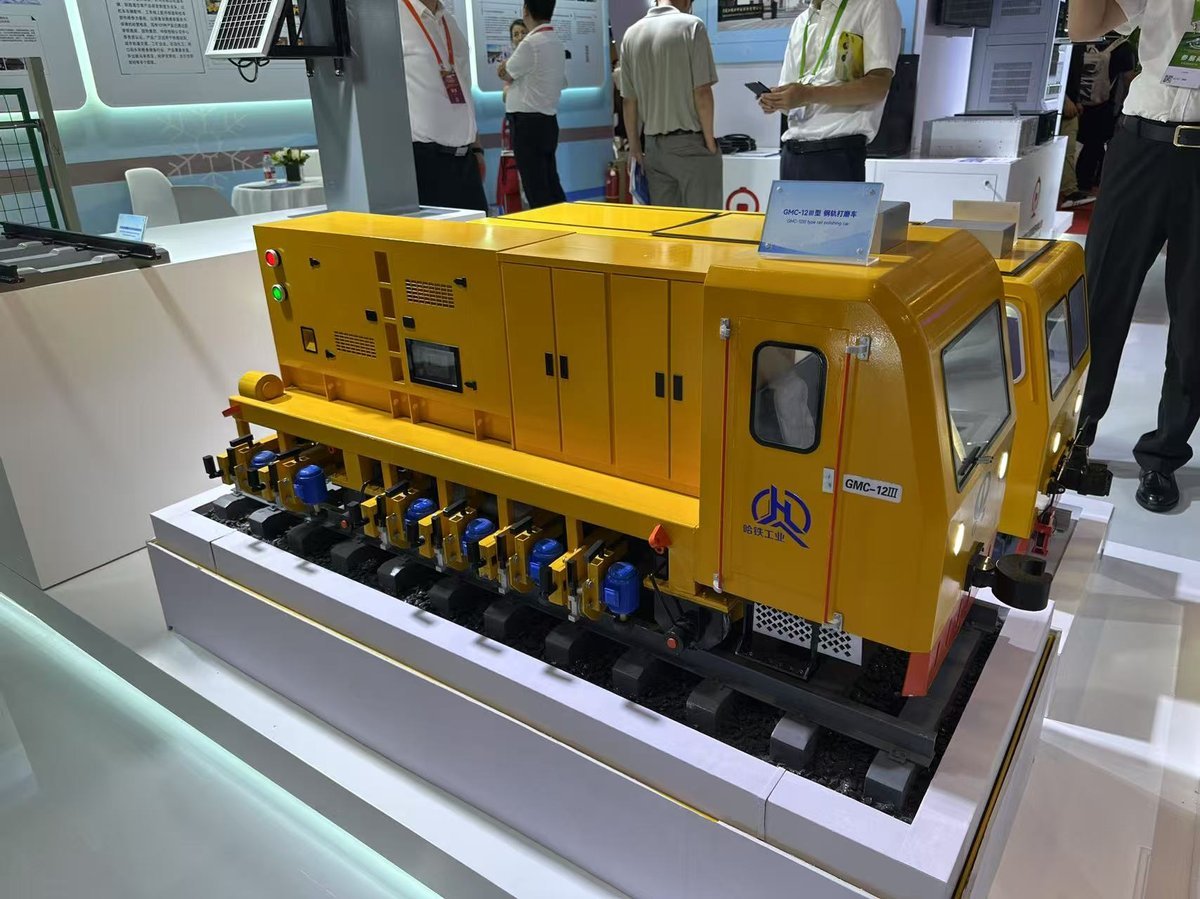
Molaton's product range is designed to cover the full spectrum of rail grinding equipment, from large production grinding trains to compact switch and crossing grinders. The same hot-pressed zirconia alumina technology is adapted across multiple form factors, ensuring consistent performance regardless of the machine platform.
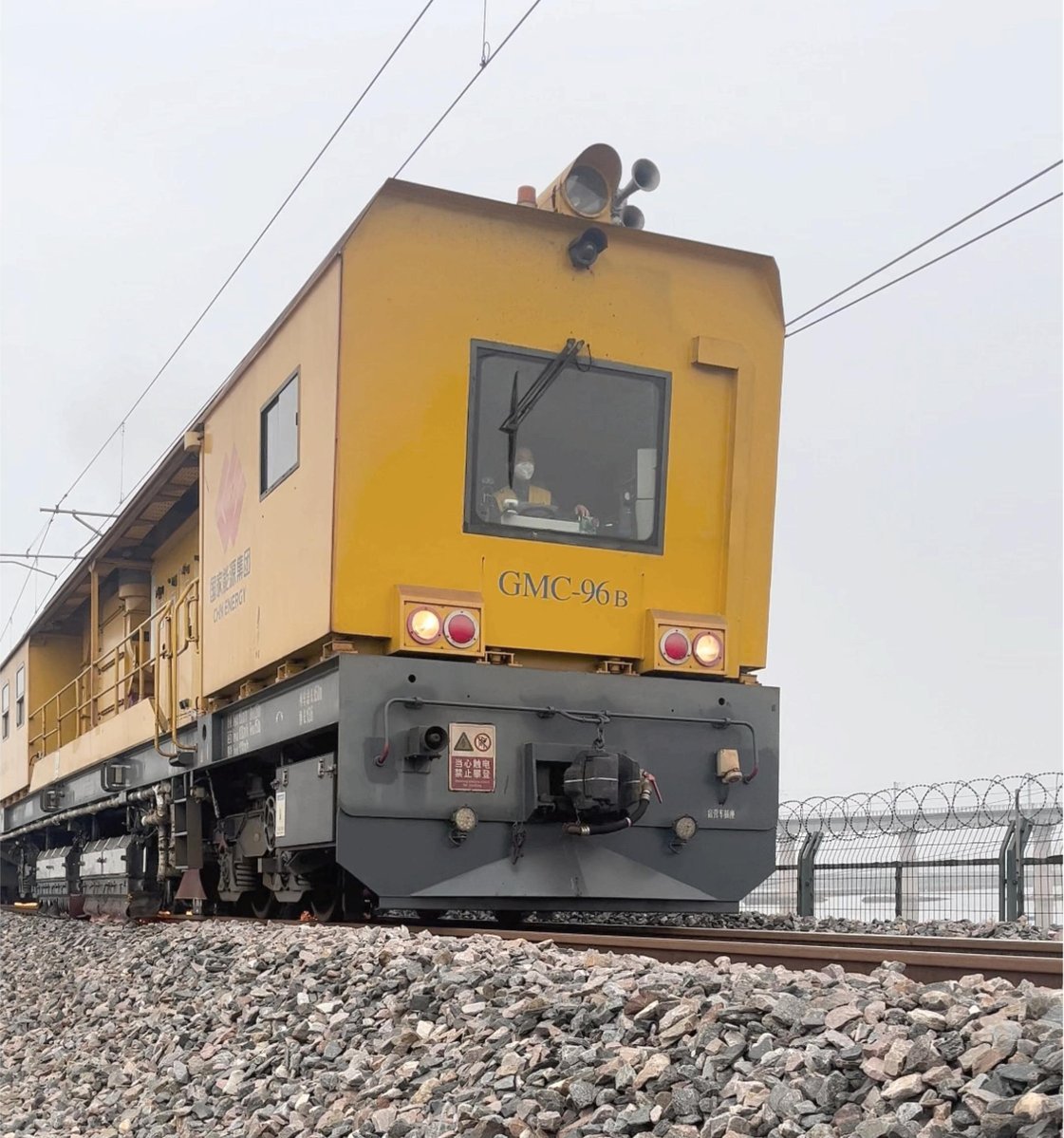
For Loram L-Series grinding trains, Molaton provides the standard profile wheels used on main-line production grinding operations. For Harsco RGH and Speno RPH series machines, compatible specifications are available with the same abrasive matrix and bond system. For restricted-area work, Molaton also produces wheels for Geismar and Robel portable grinding machines, ensuring that maintenance teams can use a single abrasive supplier across their entire fleet.
Norton (Saint-Gobain) has long been the benchmark in industrial abrasives. Their railway grinder wheels are well-regarded for consistent quality and global availability. However, field testing and long-term wear data reveal that Molaton railway grinder wheels match Norton's wear resistance while delivering measurably better value.
The data is clear: Molaton achieves equivalent wear life and cutting performance to Norton at a significantly lower unit cost. For fleet operators managing hundreds of wheels per grinding season, the savings compound rapidly. More importantly, the hot-pressed construction provides a reliability margin that cold-pressed wheels cannot match — fewer premature failures, fewer emergency changeouts, and more predictable maintenance schedules.
In direct field trials on Loram grinding trains, Molaton wheels matched Norton's metal removal rate and wear rate over a 200-kilometer test cycle. The difference was not in performance — it was in cost.
Selecting a railway grinder wheel is not about finding the cheapest option or the most famous brand. It is about matching the abrasive to the application, the machine, and the operational constraints. Here is a practical framework for making the right choice.
Verify the mounting interface, diameter, and thickness specifications against your grinding head requirements. Loram, Harsco, and Speno machines use different arbor configurations — the wheel must fit precisely. Corrective grinding (removing deep defects) requires a more aggressive wheel than preventive grinding (maintaining profile). Specify the required metal removal rate and surface finish target. Calculate cost per kilometer, not cost per wheel. Include wheel life, changeout labor, downtime, and inventory carrying costs. A 20% price difference is meaningless if the cheaper wheel wears 40% faster. Run a controlled test on a single grinding head or a single production day. Measure wear rate, metal removal rate, and surface finish. Real data beats marketing claims every time.
For maintenance managers seeking a railway grinder wheel that combines proven performance with genuine cost savings, Molaton offers a compelling alternative to established premium brands. The hot-pressed zirconia alumina technology delivers the cutting power and durability that high-production grinding operations demand, while the direct-from-manufacturer pricing eliminates the premium markup that comes with household names.
The railway grinder wheel market has been dominated by a few global brands for decades. Molaton is changing that equation by delivering equivalent technical performance at a lower cost — backed by a manufacturing process that is engineered for reliability, not just reputation. For Loram operators looking to optimize their grinding program without compromising on quality, the choice is becoming clearer.
Molaton, powered by Railwaycare, specializes in high-performance railway grinder wheels and abrasive systems for all major rail grinding platforms. From large production grinding trains to portable maintenance machines, we deliver engineered abrasive solutions that match premium-brand performance at a more competitive price.
Or visit www.railwaycare.com to explore our full range of rail maintenance solutions.
Why Railway Grinder Wheel Quality Directly Impacts Loram Fleet Performance
The Hidden Cost of Choosing the Wrong Railway Grinder Wheel for Your Operations
Molaton Railway Grinder Wheel: Hot-Pressed Zirconia Alumina Technology
Key Technical Advantages
Railway Grinder Wheel Compatibility: Molaton Fits All Major Grinding Vehicles
Molaton vs Norton Railway Grinder Wheel: Loram Fleet Head-to-Head Comparison
Performance Metric
Molaton Hot-Pressed ZA
Norton Standard Bond
Wear Resistance (MRR per mm wear)
Equivalent
Equivalent
Cutting Efficiency (Initial)
High — sharp grain structure
High — proven formulation
Bond Density
Hot-pressed, higher density
Cold-pressed, standard density
Price Position
15–25% lower
Premium
Availability for Loram Systems
In stock, direct from factory
Global distribution network
How to Choose the Right Railway Grinder Wheel for Your Maintenance Program
Step 1: Match the Wheel to the Machine
Step 2: Define the Grinding Objective
Step 3: Evaluate Total Cost of Ownership
Step 4: Request a Field Trial
Contact Molaton — Your Railway Grinder Wheel Partner
Product Solutions
Engineering Support